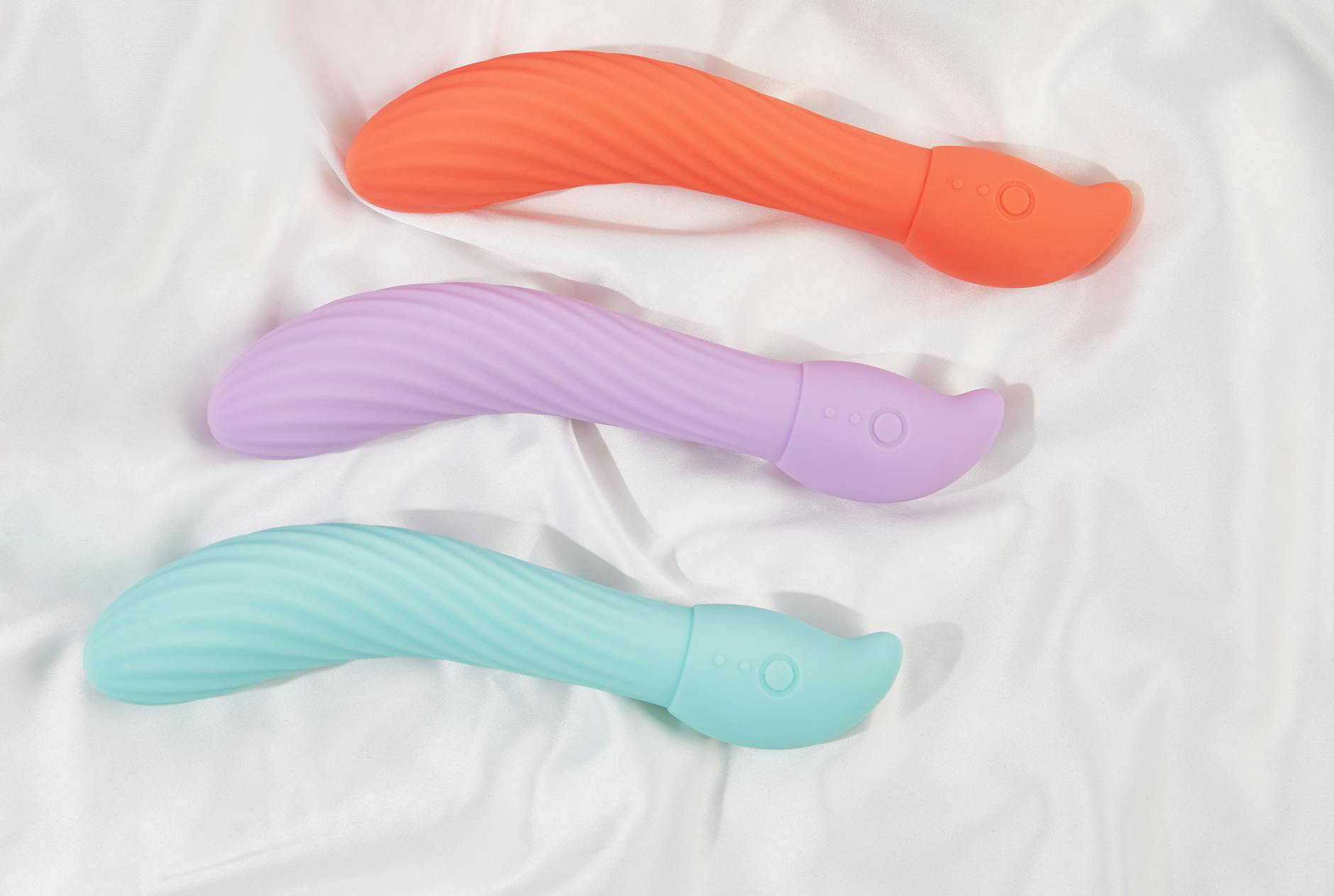
The sensation gap nobody talks about
You've probably used a wand. You know exactly what that feels like: buzzing, directional pressure, intensity you control with speed. Now imagine something completely different. Instead of vibration hitting the surface, imagine a gentle pull. Then release. Pull and release, over and over, while micro-vibrations happen underneath. That's what lemon vibrators do, and it's neurologically distinct from everything wands offer.
Here's the thing nobody mentions in the marketing copy: your clitoris doesn't experience sensation the same way every device delivers it. A lemon clitoral vibrator isn't just a different brand or a softer texture. It's a fundamentally different stimulation pattern. Your body responds to that difference.
How suction actually changes the game
Traditional wands use friction and vibration. They press against tissue and shake at a frequency (usually 50 to 100+ Hz). That's incredibly effective for lots of people. But it's one signal: repetitive pressure.
Lemon vibrators use air-pulse suction technology. Here's what that means physiologically. The suction creates a slight vacuum that pulls on the tissue around your clitoris. It's not creating a seal that's uncomfortably tight (quality suction toys are gentle here). Instead, it's creating a rhythmic compression and release that stimulates a much larger area than the tip of a wand would.
At the same time, the vibration is happening underneath. So your nervous system is receiving two distinct signals simultaneously: the pulsing suction pattern and the gentle vibration. Your brain has to process both. That doubled input creates a sensation profile that's radically different from wand vibration alone.
The clitoris has roughly 8,000 nerve endings. A wand concentrates stimulation. Suction disperses it. Some people find concentrated stimulation overwhelming. Others find distributed stimulation feels like it's unlocking a deeper layer of response.
Why orgasms feel different
When orgasm comes from a wand, it typically builds in intensity. The vibration gets unbearable, the pressure mounts, the muscles tense, and release happens in a fairly predictable arc. You're controlling that arc by managing pressure and speed.
Orgasms from lemon vibrators often report differently. The suction rhythm doesn't escalate the same way a wand does. Instead, there's a plateau quality. The sensation stays in a sweet spot for longer. Some people describe it as feeling like the orgasm is being drawn out of them rather than built toward a peak. The sensation can feel deeper because the suction is engaging tissue further from the surface.
This isn't better or worse. It's categorically different. And for a lot of people, that difference means discovering a type of orgasm they didn't know was available to them.
I've worked with countless couples navigating this discovery. One partner switches from a wand to a lemon vibrator and suddenly their solo sessions feel like they've entered new territory. Then they want to understand what changed, how to explain it to their partner, whether to shift their partnered sex accordingly. The shift is real, and it deserves to be taken seriously.
The intensity question (and why it's not what you think)
Lot of people assume lemon vibrators must be more intense because the sensation is so different. That's backward. Many suction-based lemon toys feel gentler on the surface, even as they're creating deeper stimulation. Because the suction is dispersing pressure instead of concentrating it, the experience is often described as less sharp, less direct, less likely to become painful or numb-inducing after extended use.
That matters if you have sensitive skin, thinner tissue, or if traditional wand intensity has been uncomfortable for you. The lemon clitoral vibrator can deliver more nuanced stimulation with less surface aggression.
It also matters as you age. Estrogen changes how your tissue responds to direct pressure. Suction is often more comfortable because it's not friction-based. You're not asking thin tissue to tolerate sustained rubbing. The suction pattern is gentler while paradoxically feeling deeper.
Pattern variety and arousal fatigue
Here's something that doesn't get enough attention: your nervous system adapts to repeated sensations. If you use the same wand at the same speed for months, your body learns that exact pattern. The novelty diminishes. The sensation becomes less distinct. You have to increase speed or pressure to maintain the same perceived intensity. Over time, you're working harder for less payout.
Lemon vibrators introduce pattern variation. Because suction pulses in rhythms (often around 3 to 12 pulses per second, depending on the device), and because that pulsing is combined with vibration underneath, your nervous system encounters a more complex signal. Your body doesn't adapt to it as quickly. Many people report that their lemon vibrator remains novel and interesting for far longer than their previous toys did.
This is why people often keep coming back to them. It's not just the sensation. It's the fact that the sensation stays interesting.
The partner dimension
If you're using a lemon vibrator with a partner, the differences from wands become even more relevant. Because suction doesn't require the same kind of direct pressure, the positioning is often easier. You're not hunting for the exact angle that works. You're not dealing with the vibration transferring to your partner's hand in ways they find jarring. The sensation profile is more contained.
Many couples report that switching from a wand to a lemon adult toy makes partnered pleasure feel more collaborative. You're not managing intensity or pressure the same way. The experience becomes less about precision and more about rhythm and shared attention. That shift has real relationship implications, especially if you've been navigating sensation mismatch.
The evidence base
I want to be direct: rigorous clinical trials comparing suction devices to wands don't exist in abundance. This isn't because lemon vibrators are new (they're not). It's because sex research is chronically underfunded and historically squeamish about comparing device types. What we have instead is consistent user-reported data and emerging research on suction stimulation.
Neuroscience tells us that suction activates different nerve pathways than friction does. Sensory neurologists know that distributed pressure stimulation creates different cortical activity than concentrated pressure. Pelvic floor specialists observe that suction-based stimulation produces different muscle response patterns than vibration-only devices. We can infer from this that the sensation difference is real and rooted in physiology.
User reports across thousands of reviews consistently describe lemon vibrators as producing qualitatively different orgasms. That consistency matters. It's not random. People aren't confabulating. They're reporting something genuinely different.
When a wand is still the right choice
I don't want to imply that lemon vibrators are universally superior. Some people will always prefer wands. Direct pressure and consistent vibration are straightforward. They're reliable. They work fast. If you've spent years learning your body with a wand, switching to a completely different stimulus pattern can feel foreign, even frustrating.
Also, wands have range. You can apply them to internal pressure points, use them on partners, integrate them into specific techniques. They're versatile in ways suction devices aren't. If your pleasure relies on that versatility, a wand remains the right tool.
The point isn't wands versus lemon vibrators. The point is that different stimulus patterns unlock different responses. Having both in your toolkit means you can respond to what your body wants on any given day.
How to know if a lemon vibrator might change things for you
Consider switching if: you've been using the same wand for months and it feels less novel than it used to. You've noticed that traditional vibration is becoming uncomfortable or numbing. You're curious about whether a qualitatively different sensation might deepen your pleasure capacity. You've struggled with wand intensity and need something that feels gentler but still capable of producing orgasm.
If any of those resonates, a lemon vibrator is worth the experiment. The beauty of suction-based design is that it's not asking your body to do something it's never done before. It's just approaching the same territory from a different angle.
FAQ: Lemon vibrators and wand comparison
How do lemon vibrators work differently than traditional wands?
Lemon vibrators use suction combined with vibration, while wands rely on direct vibration and pressure. The suction creates a pulsing, rhythmic sensation that feels like a gentle pull and release, while vibration alone creates sustained buzzing. Because suction disperses pressure rather than concentrating it, the sensation profile activates different nerve pathways. Many people report that lemon vibrators feel deeper and less surface-level than wands.
Will a lemon clitoral vibrator feel more intense than my wand?
Not necessarily. Many suction-based lemon toys actually feel gentler on the surface because they're not friction-based. However, the sensation penetrates differently. Some people find this feels more intense in certain ways (deeper, more involving) while being less intense in others (less sharp, less likely to numb). Intensity is subjective, but lemon vibrators typically feel different rather than simply stronger.
Can you use a lemon vibrator with a partner the same way you'd use a wand?
Partially. Positioning works differently because suction doesn't require the same angle precision. The vibration won't transfer to your partner's hand in the same jarring way. However, partnered use with suction devices is typically more about rhythm and less about managing direct pressure. It can feel more collaborative, though the learning curve is steeper than just swapping in a different wand.
Are lemon vibrators better for sensitive tissue?
Often, yes. Because they don't rely on friction and direct pressure, lemon vibrators can be gentler on thin or sensitive tissue while still producing significant sensation. This makes them particularly valuable if traditional wands have caused discomfort or if your tissue sensitivity has increased with age or hormonal changes.
How long does it take to adapt to a lemon vibrator if I've only used wands?
Adaptation varies. Some people love the sensation immediately. Others need 3 to 5 sessions to understand how to position and use the device effectively. The key is not expecting it to feel like your wand. Approach it as a new language for your body, not as an upgraded version of something familiar. Patience pays off.
Do lemon vibrators work for everyone, or are some people better suited to wands?
Some people will always prefer wands. If you respond well to direct pressure and consistent vibration, and you've built years of habit around that stimulus, switching might feel unnecessarily complicated. There's no universal answer. The value is in having options and knowing what you're choosing and why.
What comes next
The conversation around pleasure devices is finally moving past "which one is best" to "which one serves you right now." That's the real shift. Your pleasure isn't monolithic. It changes with mood, with season, with age, with relationship dynamics. Having a wand and a lemon vibrator means you're not choosing between them. You're choosing which one matches your body and your intention on any given day.
If you're curious about expanding what's possible for your pleasure, start here. Understand the difference. Try the other side. See what your body is capable of when you introduce a completely different stimulus pattern. Your pleasure is worth that experiment.