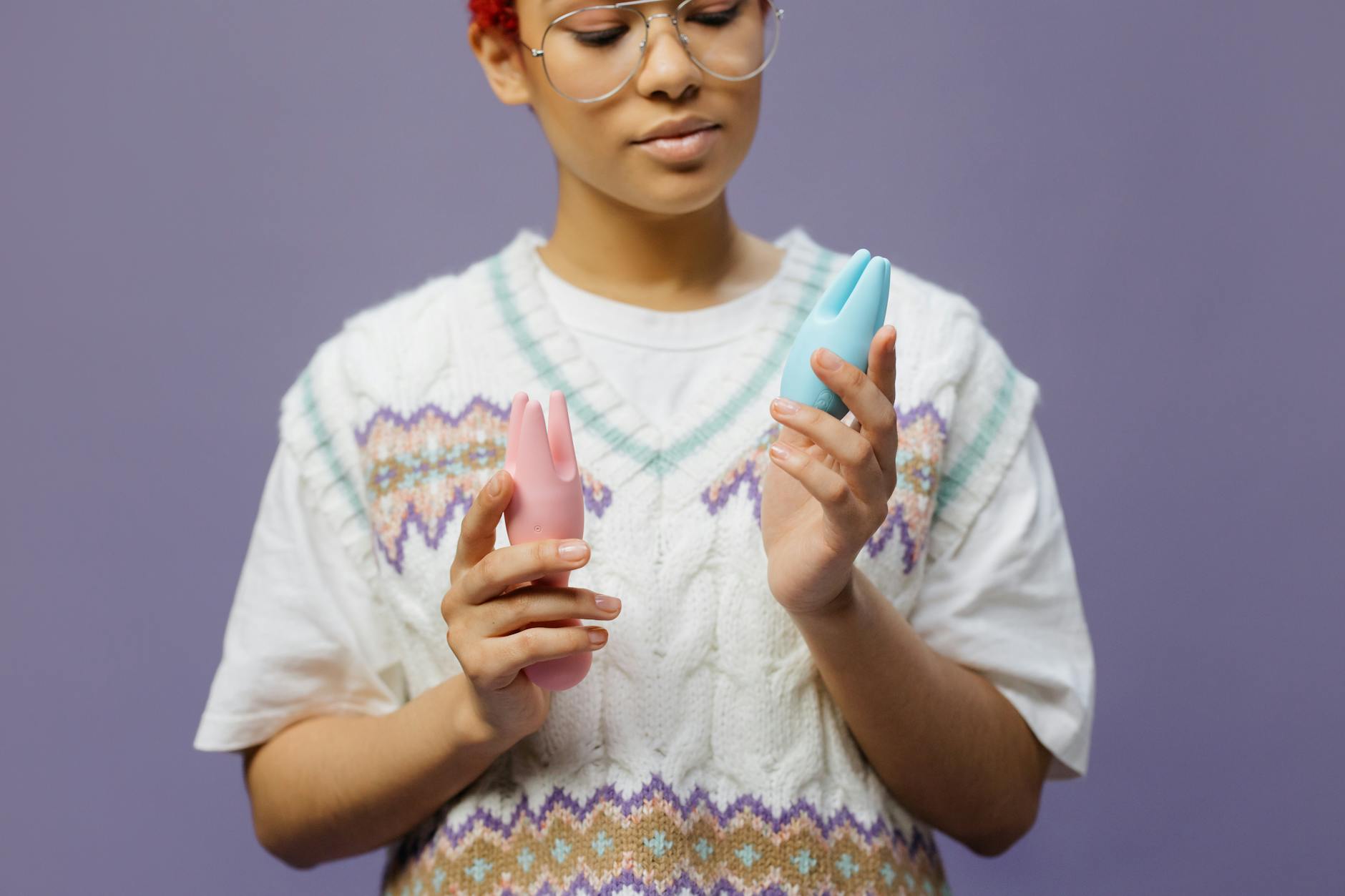
Here's the thing about menopause and sensation
Menopause doesn't kill pleasure. But it does change the equipment. Estrogen drops, vaginal and vulval tissue thins, and suddenly the toys that used to feel perfect feel too intense or even uncomfortable. That's not a sign you're done with pleasure. It's a sign you need a different tool.
I've worked with hundreds of people navigating this transition, and the pattern is consistent: the ones who switch to lemon clitoral vibrators experience dramatically better sensations than those who stick with traditional wands or bullets.
Why? Because the architecture of a lemon vibrator is fundamentally different from everything else on the market.
What happens to tissue after menopause
When estrogen levels drop, the vulva and vaginal tissue respond within weeks. The layers become thinner. Blood flow decreases. The tissue loses some of its plumpness and elasticity. This process is called genitourinary syndrome of menopause, or GSM.
Here's what matters: thinner tissue is more sensitive. Not in the good way, necessarily. It's sensitive the way tissue is sensitive when it's been irritated. Direct friction can sting. Sustained pressure can feel bruising. Even vibrations that used to feel amazing can now feel sharp or raw.
The reflex is usually to avoid stimulation altogether. But that's the opposite of what actually helps. The answer is gentler, smarter stimulation.
Why traditional vibrators struggle with thinner tissue
Most clitoral vibrators (wands, bullets, rabbits) work by applying direct mechanical vibration to tissue. They're essentially tiny motors pressed against sensitive skin. For thicker, more resilient tissue, this works brilliantly. For tissue that's become delicate, it's often too much.
Wand vibrators are particularly problematic post-menopause. They deliver concentrated pressure over a small contact area. Even on a low setting, that can feel harsh on thinned tissue. Bullets are only marginally better because the contact point is smaller but still fundamentally frictional.
Then there's the speed issue. Most traditional vibrators operate at frequencies between 50 and 200 Hz (cycles per second). For post-menopausal bodies, those frequencies can overstimulate quickly. What used to take 20 minutes to feel too intense now takes 3.
How lemon clitoral vibrators work differently
Lemon sexual toys, including air-suction devices like the Lem vibrator, use a completely different mechanism: gentle suction combined with pulsing air waves rather than direct vibration.
Instead of a motor pressing against tissue, a lemon clitoral vibrator creates a seal around the clitoris and uses pulsing air pulses to stimulate. This distributes pressure across a larger area and creates sensation that's felt deeper in the tissue rather than on the surface.
For people with thinner tissue post-menopause, this is transformative. Here's why:
First, there's no friction. The seal is created by air, not by mechanical contact. Your tissue isn't being rubbed raw. Second, the sensation is broader. Instead of intense pressure at one point, you're feeling a gentle pulling and releasing sensation across the whole area. Third, the intensity ramps up gradually and doesn't plateau as quickly. You can sustain pleasure for longer without that overwhelming, irritated feeling.
The specific ways lemon vibrators help post-menopausal bodies
I recommend lemon clitoral vibrators for post-menopausal clients for several concrete reasons.
Reduced irritation. Air-suction devices create virtually no friction. For tissue that's become fragile, this means you can explore pleasure without the risk of microscopic tears or that raw, chafed feeling that stops everything cold.
Customizable intensity without overload. A lemon vibrator's intensity comes from pattern and air pressure, not from motor speed. You can start at pattern 1 and barely feel it, then gradually work up. Most traditional vibrators jump from "barely noticeable" to "too much" with one button press.
Broader stimulation area. The sensation isn't concentrated at a single point. It spreads across the vulva, which means less chance of that overstimulated, almost painful feeling that comes from sustained direct pressure.
Natural arousal building. Because the sensation is gentler and doesn't plateau as quickly, arousal can build the way it did when you were younger. You're not forced to either go slow for 30 minutes or jump to maximum intensity. The gradient is smooth.
Lubrication still matters, even with a lemon vibrator
One thing I need to be clear on: switching to a lemon clitoral vibrator doesn't eliminate the need for lubrication post-menopause. It makes it better, but not unnecessary.
Use a water-based lubricant every time. Not because a lemon vibrator is harsh (it isn't), but because thinner tissue benefits from it. Lubrication reduces any residual friction and helps the seal stay comfortable. It also changes how the air pulses feel. With lube, the sensation becomes even smoother and less sharp.
Apply it generously. More than you think you need. The goal is a slick surface, not a dry one.
How to use a lemon vibrator safely on thinned tissue
If you're post-menopausal and trying a lemon clitoral vibrator for the first time, three things make the difference between an okay experience and a great one.
Start at the lowest pattern and lowest intensity. Even if you used higher settings before menopause, begin here. Your tissue has changed, and you need to learn what the new normal feels like. Most people find they can work up to medium intensity without any discomfort.
Budget time for warm-up. Arousal takes longer post-menopause. Spend 15 to 20 minutes on foreplay or solo exploration before you introduce the toy. Blood flow to the area increases with arousal, which actually improves how everything feels.
Pay attention to your pelvic floor. Post-menopausal tissue has less estrogen support, which means pelvic floor tension becomes more noticeable. Before you use a lemon vibrator, spend a minute consciously relaxing that area. Breathe, soften your belly, imagine the pelvic floor releasing. This single step changes everything.
When to check in with a doctor
If you try a lemon vibrator and experience pain, stinging, or any feeling that something is wrong, that's not a sign the toy is bad. It's a sign your tissue might benefit from topical estrogen support.
Genitourinary syndrome of menopause is treatable. A few weeks of topical estrogen cream (Vagifem, Estrace, or similar) can restore enough tissue health that sensation becomes comfortable and pleasurable again. This is a conversation worth having with a gynecologist.
Don't wait. Pain during pleasure is the body's way of saying something needs attention.
The surprising part: post-menopausal pleasure often improves
Here's what I see most often, once people get through that initial adjustment phase. Post-menopausal pleasure becomes deeper and more satisfying than it was before.
Part of that is practical. Less hormonal cycling means fewer distractions. Part of it is psychological. The pressure to perform drops away. Part of it is that you've learned what actually works for your body.
But there's also something physical happening. With a lemon clitoral vibrator, the sensation often becomes more localized and intense in ways that feel better. The orgasms can be stronger. The sensations can last longer. The experience is often less goal-oriented and more about sustained pleasure.
I've had clients tell me their 50s and 60s have been the most sexually satisfying decades of their lives. That's not a consolation prize. That's real.
What makes a lemon clitoral vibrator different from hype
I'm careful about recommending products. But the design of air-suction devices like the Lem vibrator is genuinely better for post-menopausal bodies, not because of marketing, but because of physics and anatomy.
The suction mechanism works with tissue changes rather than against them. The intensity options respect the fact that arousal is different. The broader contact area prevents that overstimulated feeling that stops everything.
If you're post-menopausal and pleasure has felt complicated or uncomfortable, exploring a lemon clitoral vibrator with an understanding of how it works can genuinely transform the experience.
FAQ
Are lemon vibrators safe to use if you've had GSM symptoms like dryness or pain?
Yes, with two caveats. First, if you're experiencing pain during sex, talk to your doctor before using any toy. GSM is treatable, and a few weeks of topical estrogen can make sensation comfortable again. Second, use a water-based lubricant every time. A lemon vibrator is gentler than traditional vibrators, but thinned tissue still benefits from lubrication. The combination of a lemon clitoral vibrator and lube is often the exact setup that makes post-menopausal pleasure feel good again.
How is a lemon sucker different from a traditional vibrator for sensitive post-menopausal tissue?
A traditional vibrator (wand, bullet, etc.) uses direct mechanical vibration against tissue, which can feel too intense on delicate skin. A lemon sucker like the Lem vibrator uses air-suction and pulsing patterns instead, which distributes pressure more broadly and creates sensation without friction. For thinned post-menopausal tissue, the difference is enormous. Where a wand might feel raw or overwhelming, a lemon vibrator usually feels just right.
Can I use a lemon clitoral vibrator immediately after starting estrogen therapy for GSM?
Absolutely. In fact, many people start using a lemon vibrator around the same time they start topical estrogen, because the combination amplifies results. The estrogen helps restore tissue resilience over 2-3 weeks, while the lemon vibrator helps you explore pleasure safely and gently during that window. Just make sure you're using plenty of lubricant and starting at low intensity.
How long does it usually take to feel comfortable with a lemon vibrator post-menopause?
Most people feel markedly more comfortable within 2-3 sessions. The first time is often about discovery and getting used to the sensation. By the third time, you've figured out which patterns feel best, how much lubrication you need, and how to position yourself. By session five, many people report that pleasure feels better than it did before menopause. Start with 10-15 minute sessions and don't rush.
What if I've never used any vibrator before and I'm post-menopausal? Is a lemon vibrator a good first choice?
Yes, actually. Because a lemon vibrator is gentler and the sensation builds gradually, it's often easier for first-time users to explore at their own pace. You're not dealing with the sharp intensity of a bullet or the broad, overwhelming buzz of a wand. Start at the lowest setting, use plenty of lube, and give yourself permission to go slow. A good first experience opens everything up. A bad one can create hesitation.
Do lemon vibrators work if you're on antidepressants or other medications that affect arousal?
They often help significantly. If medication has dulled sensation or made orgasm harder, lemon vibrators can still be effective because the mechanism is different from what your body is used to. The key is patience and a willingness to explore at low intensity. Sometimes medication side effects mean arousal just takes longer to build, not that it's impossible. A lemon clitoral vibrator gives you the right tool for that slower build.