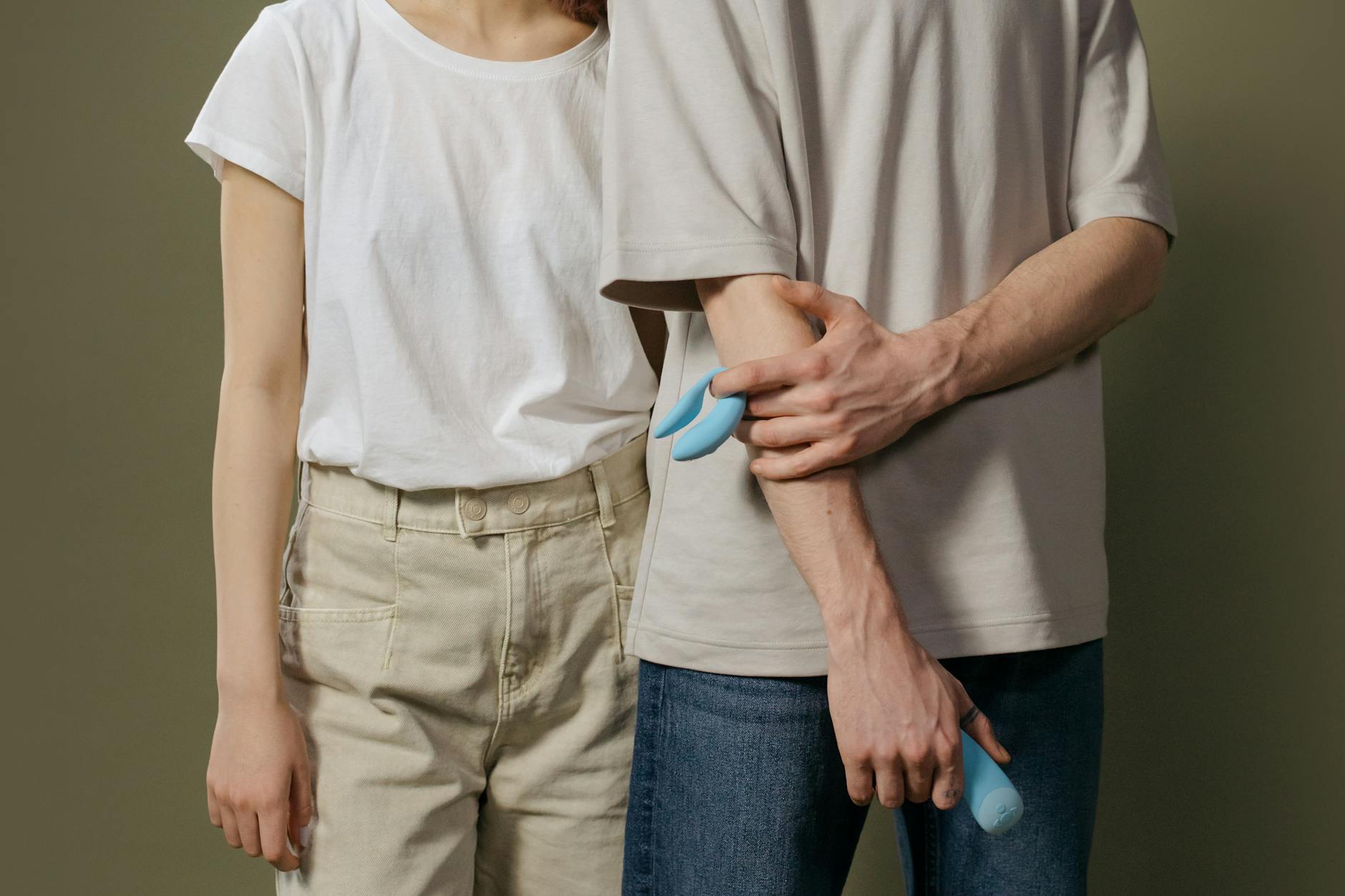
Here's what no one tells you about perimenopause and pleasure
Perimenopausal bodies are not broken. They're changing. And that change, while frustrating in a hundred ways, actually opens doors that traditional vibrators can't fit through.
I've worked with hundreds of people navigating the perimenopause transition, and the single most common complaint isn't loss of desire. It's friction. Literally. Thinner tissue means what used to feel good can start to feel raw or numb. But here's the thing nobody mentions: that same tissue shift makes air-suction technology, like lemon clitoral vibrators and the Lem, feel wildly more effective than it might have before.
Let's talk about why.
What happens to sensation during perimenopause
Estrogen is dropping. Slowly, unevenly, and differently for everyone. But the effects are fairly predictable. The vaginal and vulval tissues thin. Lubrication production decreases. Blood flow to the area takes longer to ramp up during arousal. The pelvic floor muscles lose some elasticity and can become tenser.
All of this is normal physiology. None of it means you're done with pleasure.
What it does mean is that direct pressure and friction, which worked before, can now feel like you're being rubbed with sandpaper. This is why so many people abandon their old toys during this window and feel stranded. The toys didn't change. The body did.
But there's a workaround, and it doesn't involve accepting less pleasure. It involves understanding what your nervous system actually responds to right now.
Why air-suction works where traditional vibrators stall
A traditional vibrator moves back and forth or up and down. It works by friction. When tissue is thin, when sensitivity is heightened, when you need a longer warm-up, friction-based stimulation can feel impersonal, too intense, or numbing.
Lemon vibrators and similar air-suction devices work differently. They create gentle waves of suction and release around the clitoris. No direct contact. No abrasion. Instead, the stimulation creates what researchers call "indirect stimulation" of the nerve clusters, which is gentler on delicate tissue but often more intense neurologically.
Here's the paradox that surprises most people: gentler on the body, stronger in the nervous system. That's not a trade-off. That's a win.
During perimenopause, when tissue integrity matters more and patience is lower, this matters enormously. You get sensation without soreness. You get intensity without pain. The clitoral vibrator does the work; your body doesn't have to compensate.
The physiology of arousal gets longer, not weaker
One of the biggest misconceptions is that perimenopause means faster arousal or nothing. The reality is somewhere in the middle: arousal takes longer to build, but the sensations, once they arrive, can be just as strong or stronger.
Why? Because estrogen drops don't affect the clitoral nerve bundles the way they affect vaginal tissue. Your capacity for orgasm is still there. Your nerve sensitivity is still there. What changes is the pathway. Longer warm-up. Less friction tolerance. More need for consistent, focused stimulation.
This is exactly where lemon sexual toys excel. The suction pattern is relentless but not aggressive. You can use it for 20 minutes without fatigue because there's no friction to fatigue. Your tissue doesn't protest because there's no rubbing. Your nervous system gets what it needs: sustained, rhythmic, focused stimulation that builds gradually.
Many people report that their most satisfying orgasms happen after they switch to air-suction devices during perimenopause. This isn't a polite lie. It's consistent clinical observation.
Lubrication, comfort, and the role of the lem vibrator
Let's be direct: you might need more lube than you used to. That's not a failure. That's adaptation.
But here's where air-suction technology actually reduces friction dependence. Because there's no in-and-out motion, because the stimulation is happening around the clitoris rather than on it, you don't need as much glide as you would with a traditional vibrator. A small amount of water-based lube is often enough.
This makes lemon clitoral vibrators particularly useful if lubrication is inconsistent or if you're sensitive to different lube formulations. The lem vibrator, for instance, requires minimal lube and works reliably with even thin application.
Some people use lube anyway, just for the sensation. That's fine. The point is you're choosing to, not scrambling to cover friction pain.
Mental shifts matter as much as physical ones
Here's something I talk about constantly in my practice: perimenopause often arrives with permission.
For decades, many people have organized their pleasure around a partner's pace, a cultural timeline, a body standard that no longer applies. Then perimenopause shows up, and suddenly everything has to change anyway. Might as well change it on your own terms.
That mental shift is profound. And it's the reason I see people report better pleasure during perimenopause than in their thirties, despite the physical challenges. They're not performing. They're not on a schedule. They're not waiting for permission from their body anymore.
Lemon vibrators and similar technologies support that shift because they're straightforward. No pretense. No gentle-let-me-ease-you-in design language. Just: here's a tool that does one thing very well. Use it the way that feels good.
What to expect when you switch to air-suction
If you've been using traditional vibrators and you're moving to a lemon clitoral vibrator or the Lem for the first time, the sensation is different enough that your brain might need a minute to catch up.
It won't feel like pressure. It feels more like a gentle pulling sensation, rhythmic and focused. Many people find it more intense than they expected, even on lower settings. Start low. Give yourself time to adjust. Your nervous system will catch up.
Also: these devices often feel better with less motion. You're not thrusting or rotating. You're holding still and letting the suction work. That's a different skill. It's worth learning.
Second, air-suction devices are often quieter than traditional vibrators, which matters if you live with roommates, partners, or noise sensitivity issues. The Lem, for instance, is nearly silent, which opens up options for morning or afternoon pleasure without announcing anything to anyone.
When perimenopause feels like a fresh start
I'm not going to pretend perimenopause is easy. Hot flashes are real. Sleep disruption is real. Mood shifts are real. But pleasure doesn't have to be collateral damage.
The tissue changes, yes. The timeline shifts, yes. But your clitoral nerve density is unchanged. Your capacity for orgasm is intact. What's different is the pathway, and sometimes a different pathway is actually more direct.
Tools like lemon vibrators and the lem vibrator aren't workarounds. They're often upgrades. And they're designed to work with your current body, not against it. That matters more than marketing language ever will.
If you're in perimenopause or beyond and you're frustrated with what used to work, it's not because your body is broken. It's because your tools need an update. And there's actually pleasure waiting on the other side of that update.
People also ask
Can you use a lemon clitoral vibrator if you have vaginal dryness?
Yes. In fact, air-suction devices are often better for dryness than traditional vibrators because they don't rely on friction. You might use a small amount of water-based lube for comfort, but many people find they need less lube with a lem vibrator than with other toys because there's no in-and-out motion. Start with a thin layer and see what your body prefers.
Do lemon sexual toys work during all phases of perimenopause?
They work across the whole journey, but the sensation might feel different depending on where you are hormonally. Early perimenopause, when hormones are still fluctuating wildly, might feel more intense. Late perimenopause or early postmenopause, when estrogen has stabilized at a lower level, often requires longer warm-up but can deliver deeper sensation. The consistency of air-suction stimulation actually helps bridge those changing phases.
Is the Lem vibrator safe for sensitive tissue?
The Lem vibrator is designed specifically for sensitive external tissue. It has no direct contact with the clitoris itself, only the gentle suction waves around it. This makes it safer for thinned tissue than vibrators that require direct contact. Always start on the lowest setting and use a small amount of lube if needed.
How long does it usually take to adjust to air-suction stimulation?
Most people adjust within the first 2-3 uses. The sensation is novel if you've only used traditional vibrators, but your nervous system adapts quickly. Give yourself permission to experiment. There's no wrong way to use it.
Can perimenopause actually improve your orgasms?
Yes, and this is backed by clinical observation across many practices. The combination of longer arousal windows, mental permission that often comes with perimenopause, better tools like lemon vibrators, and the absence of fertility anxiety means many people report their strongest orgasms happen after hormonal shifts. Your body isn't declining. It's reorganizing.
Should you tell your partner about switching to a lemon clitoral vibrator?
That depends on your relationship. If you have a partner you're intimate with, communication is usually better than surprise. But the decision to use a toy is yours. You might frame it as "My body is changing, and I want to explore what works now" rather than "your approach isn't working anymore." If you need language, that helps. If you need connection around the conversation, that helps too. If you just need solo time to figure out what feels good, that's valid too.
The bottom line
Perimenopausal bodies aren't broken versions of younger bodies. They're evolved bodies with different needs and different potentials. <a href="/blog/lemon-vibrator-vs-traditional-wand-which-is-right-for-me">Understanding the difference between lemon vibrators and traditional wands</a> helps you pick tools that actually fit your current reality, not your body from a decade ago.
If you've been struggling with pleasure during this transition, it's likely not a desire problem or a capacity problem. It's a tool-fit problem. And that's fixable.
Ready to explore? Start with lower settings. Give yourself permission to take your time. And remember: this phase of your life isn't a consolation prize. For many people, it's when pleasure actually gets better.