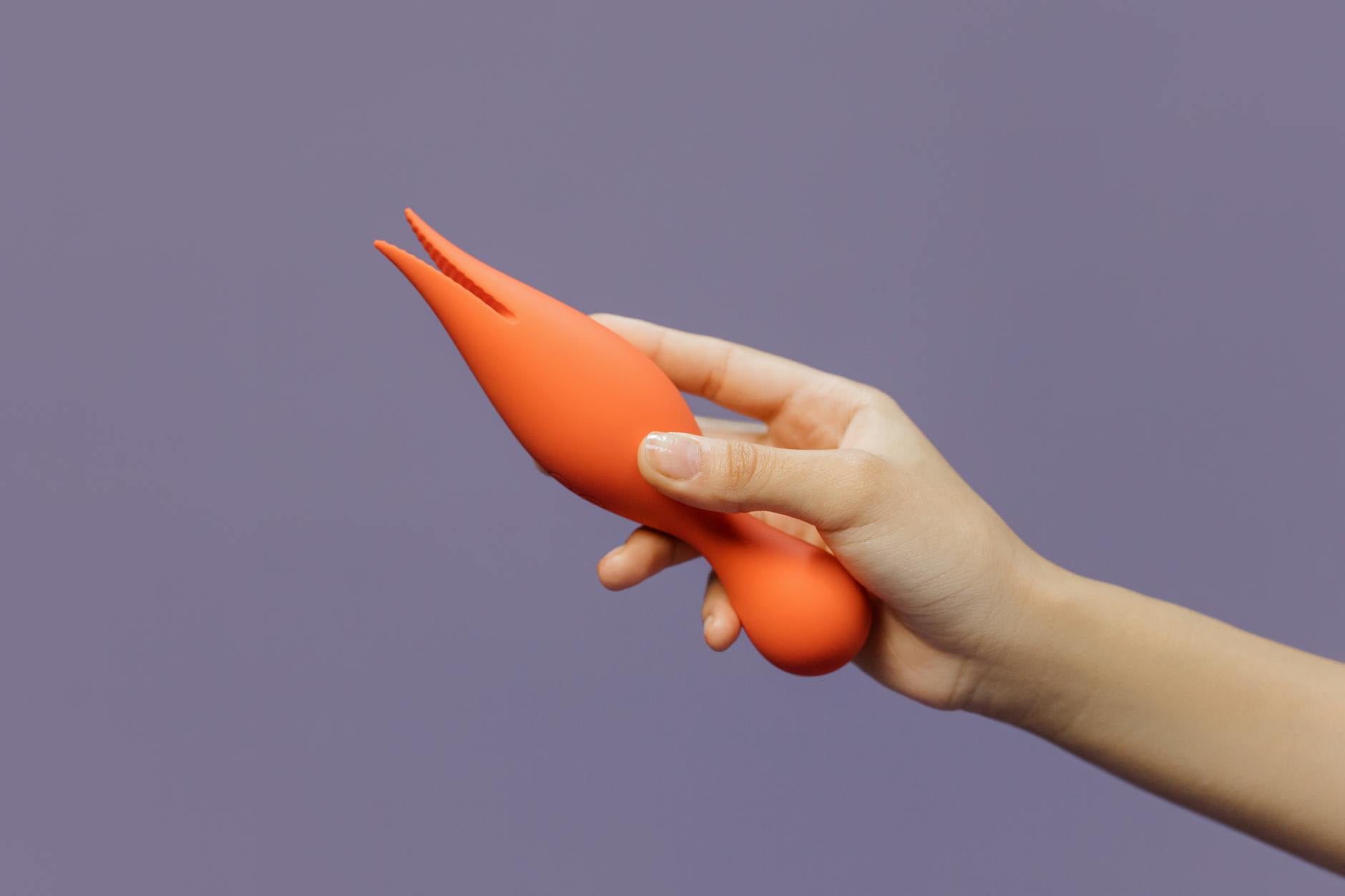
Here's the thing about partnered sex
It's not supposed to be your only sex. That sounds obvious until you realize how many people actually live that way. Your partner's pleasure, your partner's schedule, your partner's preferences. They become the entire map, and your private desires disappear into the background. Then you wonder why orgasms feel harder to reach, or why you've lost the thread of what actually turns you on anymore.
Solo pleasure isn't a backup plan when partnered sex isn't available. It's its own category entirely. It has different rhythms, different purposes, and honestly, different physics. And lemon vibrators, especially clitoral vibrators like the Lem, are designed for exactly this kind of exploration.
Why partnered people need solo time with toys
Look, your partner probably can't replicate what a lemon vibrator does. That's not a failure on their part. It's just biology. A clitoral vibrator creates patterns and intensities that human hands, mouths, and bodies can't consistently match. They're not in competition. They're tools for different jobs.
When you use a lemon vibrator solo, you're doing something your partner literally cannot observe or replicate in the moment. That creates space for the kind of exploration that actually rebuilds your sense of what feels good. Solo time with toys teaches you your own body independent of someone else's presence or expectations. That knowledge feeds back into partnered sex. You stop waiting to be turned on and start knowing how to turn yourself on, which changes everything.
There's also a quieter benefit: you get to have orgasms that are entirely yours. Not negotiated. Not timed around someone else's refractory period or their arousal. Just you and whatever intensity, duration, and number of orgasms you actually want.
The conversation you need to have first
If you've never used a clitoral vibrator solo before and your partner doesn't know about it, that's the first domino. This isn't about asking permission. It's about naming the thing so it doesn't become a secret.
Honestly, the conversation is simpler than most people expect. "I want to explore my own pleasure more independently. I'm going to use a vibrator on my own. This is about me getting to know my body better, not about anything missing from us." That's the whole thing. Most partners feel relief when they hear this. Suddenly sex doesn't have to be the only place pleasure happens, which takes a load off.
If your partner responds with resistance or insecurity, that's information. And it's worth exploring, maybe with a couples therapist, because that reaction usually signals something deeper about attachment or control that will show up in other parts of your relationship too. Don't skip over it.
How lemon vibrators work for solo sessions
Unlike penetrative toys, clitoral vibrators like the Lem operate on suction and pulsing patterns. You hold them in place, and they do the work. That's different from partnered sex, where there's typically movement or responsiveness happening on both sides. Solo, you can hold a toy exactly where you need it, at exactly the intensity and rhythm that's building your pleasure, for as long as you want.
Start without any time pressure. Set aside maybe 20-30 minutes when you won't be interrupted. No phone. No mental list of what's next. Just time that's fully yours.
The Lem has multiple intensity levels. Start at 1 or 2. Let yourself warm up. Notice what feels good. You don't need to rush to climax. The point is to pay attention to sensation, to learn your own response patterns. That data is gold because you'll know exactly what to ask for or describe to your partner later.
Solo pleasure and partnered sex aren't opposites
Here's what often happens: someone discovers what gets them off solo. They feel embarrassed and stop doing it. Or they hide it. That's the path to numbness and resentment, because now your pleasure is something shameful instead of something that belongs to you.
The better path is integration. If you know that a certain pattern on a clitoral vibrator brings you closer to orgasm, that's useful information for partnered sex too. You can ask your partner to hold the vibrator during sex. You can use it solo and then partner sex right after. You can describe the sensation so your partner understands what rhythm or pressure gets you there. None of this diminishes partnered sex. It clarifies it.
Some couples find that using lemon vibrators together actually builds intimacy faster. There's less guessing, more communication, more actual pleasure. That's not less intimate. That's more.
Frequency and boundaries
There's no right number of times per week to use a vibrator solo. Some people want daily solo sessions. Some want weekly. Some want to use one during partnered sex sometimes and solo other times. All of that is fine. The only boundary that matters is that it works for you and doesn't create conflict in your relationship.
If solo vibrator use is replacing partnered sex entirely, that's worth noticing. Not because solo pleasure is bad, but because it might signal something about your partner connection that needs attention. If it's enhancing your overall pleasure life and you're both on board, keep going.
One thing: don't hide the toy in shame or secrecy. Keep it where you can access it. If your partner finds it and you have to explain, the dynamic shifts from "I have my own pleasure practice" to "I was hiding something," and that's a different conversation. Better to just have it out on the nightstand or in a drawer you both know about.
When your partner wants to be involved
Some partners will ask to watch or participate in your solo pleasure sessions. That's a yes or no depending on what you want. You can say "This time is just for me, but I'm happy to use it during partnered sex." Or you can invite them in. Whatever preserves the core of what you're doing, which is claiming your own pleasure as something real and non-negotiable.
If your partner watches, that changes the dynamic a bit. You're no longer fully alone. Some people find that hot. Some find it distracting. Again, this is about what serves you. You're not obligated to perform your pleasure for anyone else.
Practical setup
Clitoral vibrators like the Lem are quiet enough that you don't need a soundproof room, but if you have privacy concerns, a closed door and maybe some background music or white noise gives you peace of mind. Privacy is part of what makes solo time feel sacred.
Use water-based lubricant. Your body will produce natural lubrication as you get aroused, but adding a good water-based lube makes everything more comfortable and the suction mechanism on clitoral vibrators works better with a slight wet environment.
Keep your toy clean afterward. Warm water and a small amount of gentle soap. Most silicone toys like those from Lemon Vibrator are durable and designed for regular use, so basic care is all they need.
The bigger picture
Using lemon vibrators solo while partnered isn't a sign that something's wrong with your relationship. It's a sign that you're invested enough in your own pleasure to take responsibility for it. That's actually one of the healthiest things you can do for your partnership, because you stop expecting your partner to be the sole source of your satisfaction. Pleasure becomes something you share responsibility for creating, rather than something they provide.
Your orgasms matter. The ones you give yourself, the ones your partner helps create, the ones that come from a combination of both. They all count. And owning the solo ones is part of owning yourself.
People also ask
Is it normal to want solo pleasure when you're in a relationship?
Completely normal. Solo exploration teaches you about your own body independent of someone else's timing or preferences. Most relationship therapists actually encourage this because it reduces pressure on partners to be the sole source of your satisfaction. You're learning your own pleasure map, which you then bring back to your partnership.
Will my partner feel threatened if I use a clitoral vibrator solo?
Some partners initially feel insecure, but that usually comes from not understanding that solo pleasure and partnered pleasure serve different purposes. A straightforward conversation about why you want this time helps. If your partner remains threatened, that's worth exploring together, maybe with a couples counselor, because it often signals anxiety about intimacy or control that will show up in other parts of your relationship.
Can I use lemon vibrators during partnered sex if I've been using them solo?
Absolutely. Some people use clitoral vibrators throughout partnered sex for extra stimulation. Others use them solo and then have partnered sex afterward when they're already warm. Others incorporate them into foreplay. There's no single right way. The Lem works beautifully integrated into partnered sessions if that's what you both want.
How often should I use a clitoral vibrator if I'm partnered?
There's no prescribed frequency. Some people use vibrators daily, some weekly, some during partnered sex occasionally. The right frequency is whatever doesn't interfere with your relationship and feels good to you. If you're noticing that solo vibrator use is consistently replacing partnered intimacy, that's worth examining, but regular solo pleasure is completely healthy.
What if my partner wants to watch or participate in my solo sessions?
That's up to you. You can keep solo time entirely to yourself, or you can invite your partner in sometimes. Neither is wrong. The boundary that matters is that your pleasure remains something you own and direct, whether solo or shared. If participating with your partner starts to feel performative or obligatory, it's okay to reclaim that time as just yours.
Does using a vibrator solo affect my ability to orgasm with a partner?
No. In fact, knowing your own pleasure patterns usually improves partnered sex because you understand what works for you and can communicate that. Some people find that clitoral vibrators during partnered sex enhance sensation, while others prefer them solo. Neither approach makes you "dependent" on the toy. Your body's capacity for pleasure remains intact.
Taking ownership of your solo pleasure while you're partnered isn't selfish. It's the opposite. It's saying your orgasms matter enough to invest in them. And when you do that, partnered sex gets better because there's less pressure and more actual communication about what feels good. That's the win.