
Here's what nobody tells you about desire coming back
Your libido doesn't return like a light switch. It comes back like a dimmer, and someone keeps adjusting it without asking first. Some weeks you feel nothing. Other weeks you're thinking about sex at 2 p.m. on a Tuesday. A few weeks later, you're back to quiet again. This isn't a sign something's wrong. It's actually completely normal, and it's way more common than you'd think.
The problem is that most sex toys are built for consistent desire. They assume you'll want the same intensity every single time. Traditional vibrators with fixed speeds can feel either too aggressive when your body's barely aroused, or weirdly weak when you're genuinely turned on. Lemon clitoral vibrators work differently. They use suction stimulation instead of direct vibration, which means they adapt to wherever your body is on any given day.
Why your libido's coming back in waves
There are actually several reasons your desire might feel unreliable right now. Stress is the obvious culprit. But so are subtle hormonal fluctuations, medication timing, sleep quality, and relationship dynamics you might not even notice until you're tracking it.
Here's the thing that matters: your baseline hasn't dropped. Your arousal pattern has just become more context-dependent. You're more sensitive to whether you feel rushed, whether you trust your partner, whether you're actually in the mood or performing the role of someone in the mood. That's not a malfunction. That's actually your nervous system getting pickier about what counts as genuine desire.
Some people find their libido returns stronger than before, but only under specific conditions. Maybe you need more foreplay now. Maybe you need a quieter environment. Maybe you need to initiate instead of waiting to be invited. These aren't obstacles. They're information.
The tool-mismatch problem
When desire is inconsistent, the last thing you need is a toy that requires you to meet it halfway. A traditional vibrator on setting 4 feels perfect when you're already aroused. When you're barely interested, that same setting feels jarring, too much, too fast. So you either skip pleasure altogether, or you force yourself through it, which teaches your body that sex requires pushing through discomfort. Neither works.
Lemon adult toys with suction work better here because suction naturally adjusts to your body. The sensation builds gradually. You can start at pattern 1 and your body decides when it's ready to move up. There's no guessing whether the intensity is right. Your clitoris is literally controlling the pressure through its own arousal response.
How to use a lemon clitoral vibrator when your desire's unpredictable
First, stop scheduling sex around what you think you should want. Schedule it around what you're actually noticing. Spend two weeks just paying attention. What time of day does desire show up? After work or before? Morning or night? Are you more interested when you've had alone time? When you've been close to your partner? When you haven't seen them in hours?
Once you have data, don't treat it like a rigid schedule. Treat it like a forecast. If you notice you're usually interested on Thursday nights, that's where you protect some time. But if Thursday rolls around and you feel nothing, that's okay. Forcing it doesn't create desire. It creates resentment.
When you do use the lemon vibrator, start with intention, not expectation. That means you're not goal-setting around orgasm. You're just curious about sensation. Take ten minutes with the lowest setting. Notice what your body responds to. Half the time, arousal builds from there. Sometimes it doesn't. Both are fine.
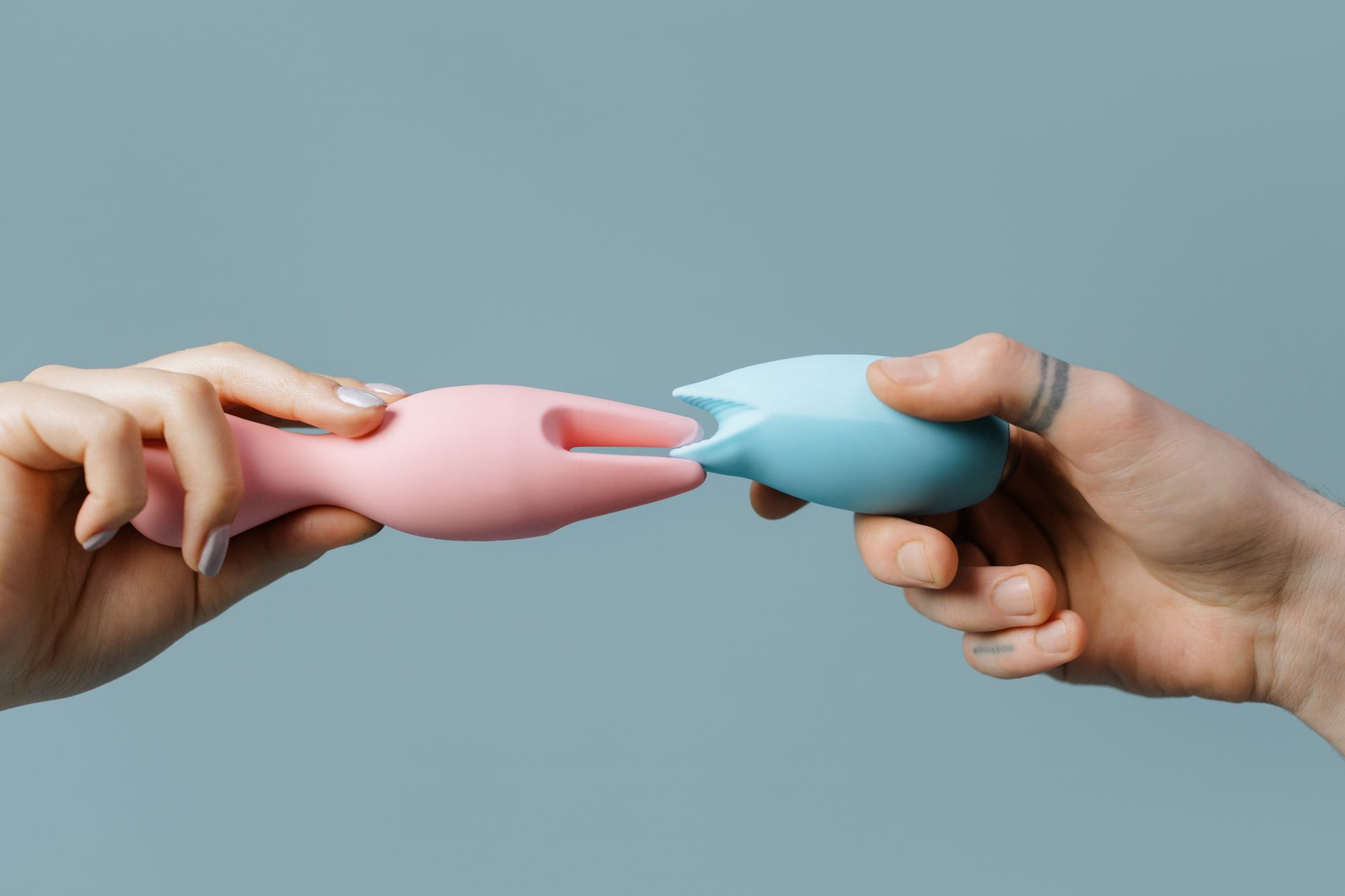
Photo by cottonbro studio on Pexels
The patience play
When libido is bouncing back unevenly, patience becomes your actual tool. Not metaphorical patience. Actual time spent doing nothing but feeling sensation. This is where the design of a lemon vibrator helps. Because suction builds gradually, it naturally paces you. You can't rush it. Your clitoris either responds or it doesn't.
This is also where longer foreplay becomes essential. If you've been using the extended foreplay approach, keep doing it. But now you're not doing it to build up to something. You're doing it because your arousal needs more runway to take off. Spend 15 minutes kissing. Spend 10 minutes on non-genital touch. Then introduce the toy. This isn't stalling. This is giving your nervous system permission to actually show up.
Communication when desire's unpredictable
If you have a partner, this is the conversation: "My desire comes and goes right now. It's not about you. It's my nervous system recalibrating. Sometimes I'll want sex and sometimes I won't, even if everything else feels the same." Then give them permission to tell you the same thing.
The fastest way to kill returning libido is to turn it into an obligation. The second-fastest way is to make it about whether your partner feels desired. Those are two different conversations, and you have to keep them separate.
When to actually worry
There's a difference between libido that bounces around but eventually shows up, and libido that's completely disappeared. If you haven't felt genuine desire or arousal in more than two months, that's worth mentioning to a doctor. Same if the flatness feels new and different from how you normally are.
But uneven desire? Weeks where you're interested, weeks where you're not? That's not a medical issue. That's just how desire works when you're in transition. The goal isn't to force it to be consistent. The goal is to stop fighting the rhythm and start working with it.
Building on foundation that's returning
Some weeks you'll use the lemon vibrator and orgasm easily. Some weeks you'll use it and feel very little. Both are data. Neither one means anything about your capacity for pleasure. It just means your arousal window shifts. Your clitoral sensitivity shifts. Your interest in solo pleasure versus partnered pleasure shifts.
The point of a good toy isn't to guarantee an outcome. It's to give your body options. Lemon clitoral vibrators do that better than traditional vibrators because they work with your body's response instead of overpowering it. On the high-desire weeks, you'll love them. On the low-desire weeks, they won't feel jarring or inappropriate. They'll just be available.
Your libido isn't supposed to be consistent. It's supposed to be honest. That inconsistency you're experiencing? That's actually your body becoming more honest about what it needs.
People also ask
Is it normal for libido to come back unevenly after a long period of low desire?
Completely normal. Your nervous system and hormones don't reset on a schedule. Desire typically returns in waves for weeks or even months. You might have a high-interest week, then drop back down, then spike again. This pattern is so common that it's almost the default experience. The inconsistency doesn't mean something's wrong. It means your body is recalibrating.
Why do lemon vibrators work better for inconsistent libido than traditional vibrators?
Lemon adult toys use suction rather than direct vibration. This means the sensation builds gradually and responds to your body's arousal level instead of imposing a fixed intensity. When desire is low, a strong vibration can feel overwhelming. Suction naturally paces itself and lets your body decide when it's ready for more intensity. This makes lemon vibrators more adaptable to wherever you are on any given day.
Should I use a lemon clitoral vibrator even if I'm not sure I'm in the mood?
Yes, but with zero pressure around the outcome. The point isn't to force arousal. It's to give your body a low-stakes opportunity to respond. Sometimes five minutes with gentle stimulation is enough to flip the switch. Sometimes it's not. Both are fine. The moment it stops feeling curious and starts feeling like an obligation, stop.
How long does it usually take for libido to stabilize again?
It depends what caused the dip. Hormonal shifts can take 3-6 months to settle. Stress-related patterns might resolve in weeks. Relationship-related issues take longer because they require actual change, not just time. There's no universal timeline. Your job is to notice your own pattern and work with it rather than wait for some outside standard to appear.
Can my partner help when my libido's unpredictable?
Yes. They can stop taking it personally. They can ask what you need that week instead of assuming it's the same every week. They can initiate sometimes and let you initiate other times. They can spend time in foreplay even if it doesn't lead anywhere that particular night. The best thing a partner can do is treat your returning desire like a conversation, not a performance.
Is there a position or technique that works best when arousal is slow to build?
Start lying down or sitting comfortably. Remove any pressure to move or perform. Use the lemon vibrator at the lowest setting and just pay attention. Sometimes lying on your back works. Sometimes lying on your side feels better. Sometimes you want direct stimulation on the clitoris. Sometimes you want broader stimulation on the whole vulva. Let your body tell you. There's no one right way. The technique that works is whatever your body's asking for that day.
The real truth about return
Libido doesn't come back as a stable, predictable force. It comes back as a conversation with your body. Some days your body's talking loudly. Other days it's quiet. That variability isn't a failure. It's actually your nervous system getting more precise about what it needs. A good lemon vibrator doesn't erase that variability. It gives you a tool that works with it instead of against it. That matters more than you'd think when you're trying to meet yourself where you actually are, not where you think you should be.