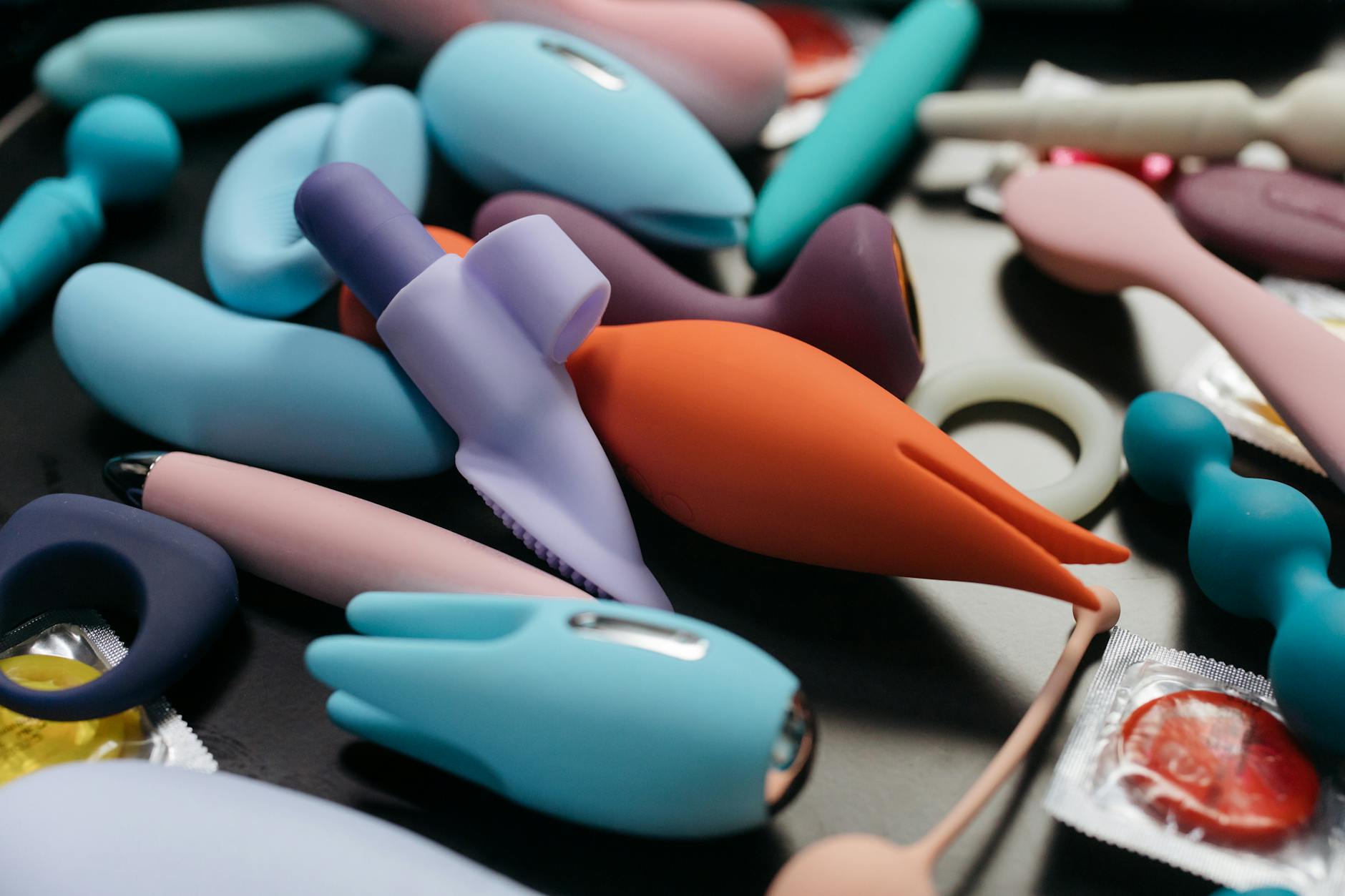
Here's the thing about sensation during partnered sex
A lot of people assume the issue is their partner's technique or your body's responsiveness. Sometimes it's neither. Sometimes you're just not getting the right kind of stimulation. Penetration alone doesn't activate the same nerve clusters that direct clitoral contact does, and if your partner can't reach or sustain that stimulation effectively, you're left feeling disconnected from the experience entirely.
That's where adding a clitoral vibrator to partnered sex makes a genuine difference. It's not about substituting your partner. It's about completing the picture.
Why sensation goes missing during partnered sex
Three things happen:
You need more direct stimulation than your partner can provide solo. The angle is awkward, the rhythm isn't quite right, or they get tired. That's biology, not failure. Clitoral nerve endings are concentrated in a small area, and sustained, precise stimulation is harder for a hand or body to maintain than most people realize.
Your nervous system has adapted to less intensity over time. If you've been having partnered sex without clitoral stimulation for months or years, your body learns to expect less. Sensation dulls because your brain stops paying attention. Adding vibration rewakes those pathways.
You're in your own head during penetration. You're monitoring whether your partner is close, whether you're taking long enough, whether this is working. That cognitive load kills sensation. A vibrator gives you something concrete to focus on instead.
What lemon clitoral vibrators do differently
Lemon vibrators use suction and pulsing rather than pure vibration. That matters. Suction stimulates a broader nerve cluster without the concentrated pressure that can feel overwhelming or uncomfortable during partnered sex. It also creates an indirect stimulation that lets you feel your partner's movement at the same time, rather than one sensation drowning out the other.
You get layered sensation. Penetration plus clitoral suction equals feedback your nervous system actually registers.
How to introduce a lemon vibrator during partnered sex
Start the conversation outside the bedroom. "I want to feel more during sex" is not a criticism of your partner. Frame it as an addition, not a replacement. "I've been thinking about trying a vibrator together" opens dialogue without blame.
Pick your position first. Woman-on-top or lying on your back facing your partner gives you easy access to hold the vibrator yourself. If you're more comfortable with your partner holding it, side-by-side or spooning work well. Test it solo once before partnered sex so you know the sensation and can show them what feels good.
Start with the vibrator before penetration. Use it for 3-5 minutes while you're both aroused but before they enter. This primes your nervous system and builds anticipation. It also gives you and your partner a moment to adjust to the new element without the pressure of simultaneous sensation.
Keep it on a lower setting during penetration. Patterns 1-3 on most lemon clitoral vibrators work best paired with movement. Higher settings can be distracting or overstimulating once you're syncing with your partner's rhythm. You can always increase later.
Let your partner control pace, you control vibrator intensity. This splits responsibility in a way that actually deepens connection. They move, you adjust the vibration based on what you need. You're communicating without talking.
Positions that actually work
Woman-on-top with vibrator. You can angle the vibrator while controlling depth and pace. Your partner gets to see and feel what's happening. You have full agency over sensation.
Lying face-to-face, vibrator between you. Your partner can hold or you can. The pressure and warmth of their body plus clitoral stimulation plus penetration creates genuine layering. This is the position most people find creates the fastest return to sensation they thought they'd lost.
Spooning, vibrator in front. Intimate, slow, and the angle often works better for sensation than people expect. You're close, conversation is easy, and you can adjust without breaking position.
Avoid positions where your partner can't see or reach the vibrator easily, at least at first. You don't want the added element to create physical frustration.
What to expect the first time
The first session might feel weird. You're coordinating three things instead of two. That's normal. It usually takes 2-3 times before the sensation becomes integrated rather than distracting.
Some people find they orgasm faster. Some find they need less build-up to reach climax. Some find the sensation is so restored that they can actually feel what their partner is doing again, which can be surprisingly emotional. That reconnection is often the real win.
If it doesn't feel good, don't force it. Maybe you need a different angle, a lower setting, or just more time. This isn't a test you can fail.
The conversation after
Tell your partner what worked. "That felt incredible" is honest feedback. So is "I think I liked the second position better." You're building a shared language around pleasure, not just around the object.
Many couples find that adding a vibrator actually makes their communication about sex easier in general. You've both acknowledged that you want more sensation, you've experimented together, and you've succeeded. That creates momentum. How to Use Lemon Vibrators When Reconnecting With a Partner After Time Apart covers more depth on rebuilding that connection over time.
When sensation doesn't return immediately
If you've been without strong clitoral sensation for a long time, rewaking it takes patience. Your nervous system is capable of relearning, but it doesn't happen in one session. Most people notice change within 2-4 weeks of regular use. Some take longer.
If you're on birth control or hormonal medications, sensation changes can be tied to those factors too. How Lemon Vibrators Help Restore Pleasure When Birth Control Numbs Sensation digs into that angle specifically.
If sensation doesn't improve after a month of regular partnered use, it might be worth checking with a healthcare provider. Sometimes reduced sensation signals something like pelvic floor tension that a vibrator alone won't solve.
The bigger picture
Adding sensation back into partnered sex does something beyond the physical. It reminds both of you that you care about pleasure, that you're paying attention to what the other person needs, and that sex is worth investigating together. That's often the part that matters more than the vibrator itself.
FAQ: Sensation and lemon clitoral vibrators during partnered sex
Can I use a lemon vibrator if my partner has never seen one before?
Yes. Start by showing them the device outside the bedroom, explain what it does, and let them hold it. Demystifying it first takes a lot of pressure off the moment. Most partners are curious rather than threatened once they understand it's about adding sensation, not replacing them.
How loud are lemon clitoral vibrators during sex?
Most lemon vibrators operate at 60-70 decibels on higher settings, which is roughly the volume of a conversation. If quiet is important, keep it on lower settings (1-3) and use it during moments with some natural sound. How to Use Lemon Vibrators When There's No Privacy at Home covers quieter options specifically.
What if I can only feel sensation with the vibrator on high, and that's uncomfortable with my partner inside me?
Start solo with the vibrator on high to reestablish your baseline, then work backward. Use high setting without penetration for a few sessions, then try medium setting with penetration, then lower. You're training your nervous system to register sensation at lower intensity again. It usually takes 2-3 weeks.
Should my partner hold the vibrator or should I?
Start with you holding it. You know exactly where and how much pressure feels good. Once you're both comfortable, your partner can take over if they want to. Sharing control is where the real intimacy deepens. Some couples alternate, some prefer one person controlling it always. There's no rule.
Can sensation return without a vibrator, or do I need one permanently?
Sensation can return with time and attention. A vibrator accelerates the process and makes the experience more pleasurable in the meantime. Many people find they need it less frequently after a few months because their nervous system has rewoken. It's a tool, not a forever requirement, though plenty of people keep using them because they genuinely enjoy the sensation.
What if my partner is worried the vibrator means they're not enough?
Have that conversation explicitly. "Your body alone doesn't give me the clitoral stimulation I need, and that's not a failure." It's like saying you both enjoy music, so you're adding speakers. The speakers don't replace the musician. Neither does a vibrator replace your partner's touch. Most partners feel relieved knowing there's a concrete solution to a problem they couldn't solve alone.