Let's start with what nobody warns you about
Health crises do weird things to your body. Surgery, hospitalization, chronic illness, or even a long infection doesn't just affect your tissues. It disrupts your sense of your own body as a source of pleasure. You might feel disconnected from yourself. You might feel unsafe. You might feel like you've forgotten how to want anything at all.
Returning to intimacy after a health event is not about jumping back in. It's about rebuilding trust with your own nervous system.
What actually happens during recovery
Your body went through something. Surgery created scars (visible or internal). Illness depleted your energy reserves. Hospital time separated you from your partner or from yourself. Medications changed how your nervous system responds. Pain, if you experienced it, taught your body to brace.
That bracing doesn't disappear when you're officially "cleared" to resume sex. Your pelvic floor remembers. Your brain remembers. Your nervous system is still in a slightly elevated state of caution.
Here's what I see most often: people expect pleasure to return on schedule, like a body part that got repaired. When it doesn't, they assume something is permanently broken. It's not. It's protective. Your nervous system is doing its job. Your job right now is to show it that pleasure is safe again.
The anxiety piece (which is bigger than you think)
Recovery from a health crisis almost always comes with a layer of anxiety you don't talk about. What if I hurt myself again? What if something tears? What if the pain comes back? What if my partner is disappointed? What if I can't orgasm like I used to?
That anxiety lives in your body. It lives in your pelvic floor, your breathing, your shoulders. When you're anxious, your body tightens. When your body is tight, pleasure becomes harder. When pleasure is harder, anxiety goes up. It's a loop.
Lemon vibrators work here because they interrupt the loop. They're not about forcing an orgasm. They're about giving your nervous system a simple, external focal point. Suction stimulation on the clitoris is consistent. It doesn't depend on your mental state or your partner's presence. It teaches your body that sensation can still feel good.
How to restart without retraumatizing
Four non-negotiable rules for the first month back.
Rule 1: Solo first, partnered later. Your nervous system needs to know it's safe in a low-stakes environment. Solo play with a lemon clitoral vibrator lets you explore without worrying about someone else's experience or expectations. This is not selfish. This is medicine.
Rule 2: Start with zero penetration. Even if you had no genital surgery, even if your health crisis was cardiac or respiratory. Your brain needs to know that touch doesn't have to lead anywhere. A lemon vibrator on the external clitoris sends a very different signal than anything penetrative. Safe. Contained. Non-escalating.
Rule 3: Budget time for your nervous system to settle. The first few times you try, you might feel flooded, or weirdly emotional, or numb. All of that is normal. Don't interpret it as failure. Your body is processing. Spend 10 to 15 minutes just letting sensation happen without demanding an orgasm. If an orgasm happens, great. If not, equally great. The goal is reconnection, not a specific outcome.
Rule 4: Acknowledge the loss. Your body is different now. You might have scars. Your sensation might be different. Your capacity might be different. Grieving that is not weakness. It's honesty. The sooner you accept what changed, the sooner you can discover what's actually good about your new body.
Why lemon vibrators specifically work for this
Clitoral suction toys like the lemon vibrator are gentler on healing or sensitive tissue than traditional vibration. They don't require you to be already aroused to feel good. They work at lower arousal states, which means they can help build arousal from zero instead of assuming it's already there.
For someone rebuilding after a health crisis, that matters. You're not starting from desire. You're starting from curiosity. You're starting from permission. A lemon vibrator bridges that gap.
When you're ready to involve your partner
The hardest conversation is the first one. Your partner has been worried about you. They might be afraid of hurting you. They might assume you don't want them anymore. They might be waiting for you to make the first move.
None of that gets solved without talking.
Here's what I recommend: "I want to rebuild our intimacy, and I need to do it slowly. I've been using a lemon vibrator solo to reconnect with my body. I'd like you to know that's happening, and I'd like your support while I figure out what feels good. That doesn't mean sex yet. It might mean just being in the room. It might mean we take weeks."
A partner who loves you will say yes to that.
When you do invite them into the process, the lemon vibrator is still useful. They can watch. They can hold you. They can use it on you. What matters is that you control the intensity and the pace. You're not performing. You're exploring.
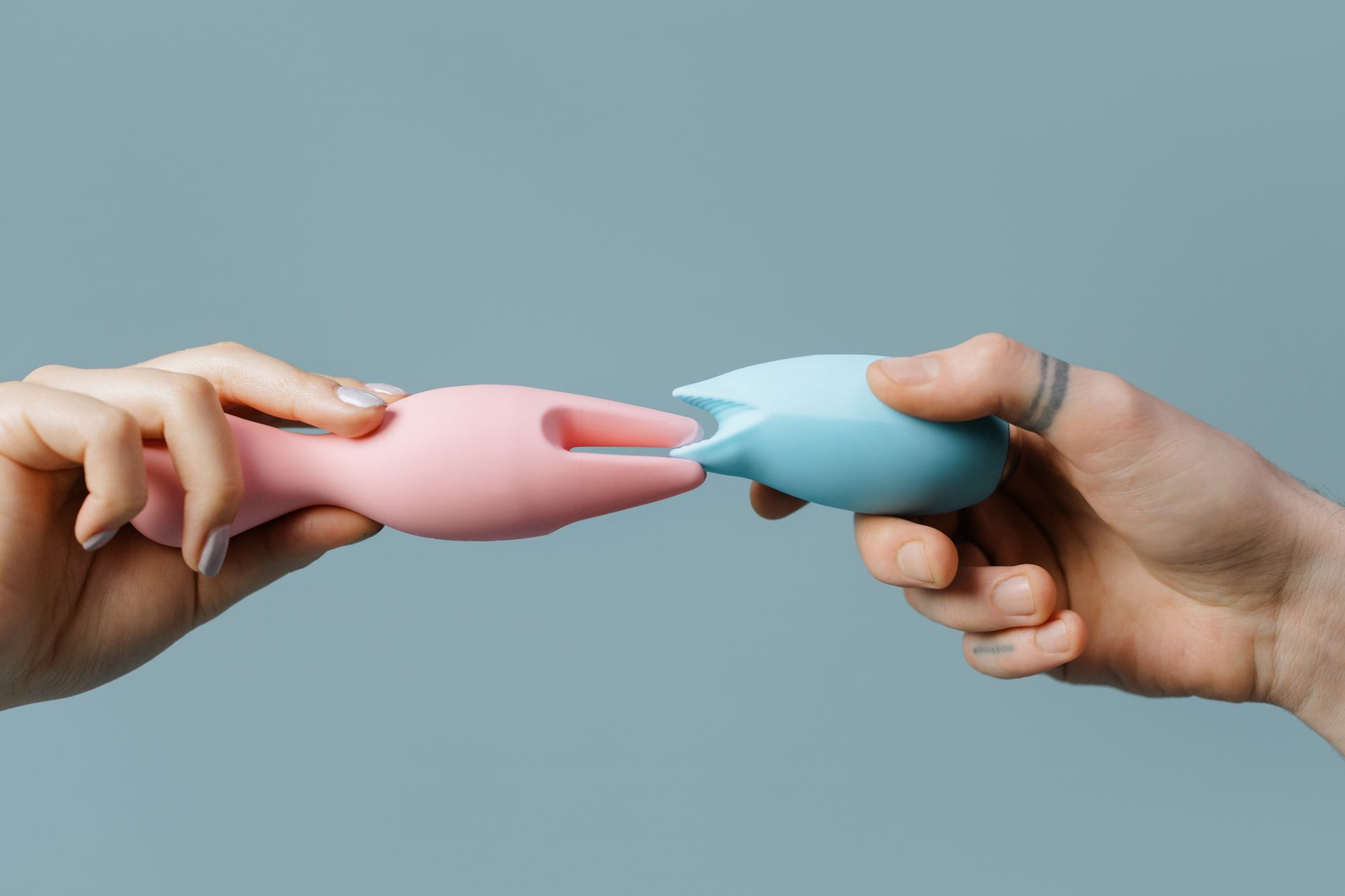
Photo by cottonbro studio on Pexels
Managing the emotional waves
Recovery from a health crisis is not linear. Some days your body will feel like yours again. Some days it won't. Some days you'll want pleasure and it will feel accessible. Some days pleasure will feel like the last thing you want.
That's normal. Your body is integrating a lot.
What helps: tracking your days. Not in a clinical way. Just "today I felt open" or "today I felt closed." Over time you'll notice patterns. Stress makes you close. Sleep helps you open. Certain times of the month shift things. Exercise sometimes helps, sometimes depletes you. Understanding your own pattern is far more useful than someone else's timeline.
If you notice you're stuck in the closed state for weeks, talk to a therapist. Not because something is wrong with you, but because health crises often leave trauma in their wake. Trauma and pleasure don't coexist. A trauma-informed therapist can help you process what happened so your nervous system can finally relax.
The permission you actually need
Your health crisis gave you permission to slow down. To ask for what you need. To say no without explanation. To prioritize your body's signals over other people's expectations.
Hold onto that. It doesn't disappear once you're "recovered."
Using a lemon vibrator is not a substitute for your partner. It's not a sign you're broken. It's not a race back to normal. It's a way of saying: I'm listening to my body. I'm honoring what it's been through. I'm rebuilding pleasure on my own terms.
That takes longer than most people expect. That's also exactly how it should be.
People also ask
How long after surgery can I use a clitoral vibrator safely?
That depends entirely on your surgery. A minor procedure might clear you in weeks. Major surgery might need months. The rule: if your doctor said penetration is off-limits, avoid anything inside. A lemon clitoral vibrator on the external clitoris is usually safer because it doesn't involve depth or pressure on surgical sites. But ask your surgeon or gynecologist specifically. They know your body. I don't.
Can using a vibrator retraumatize me if I'm nervous?
Yes, if you push too hard or too fast. That's why solo exploration comes first. You control the speed, the intensity, the duration. If something feels wrong, you stop. No judgment. With a partner present and watching, it's easier to notice your own signals. Some people find having their partner there reduces anxiety. Others find it increases it. Both are valid.
What if I still have pain during or after using a lemon vibrator?
Stop and tell your doctor. Pain during or after sexual activity post-surgery can signal that something isn't healed yet. It can also signal pelvic floor dysfunction, which is common after health crises. A pelvic floor physical therapist can assess and help. Don't push through pain thinking it will get better. It usually doesn't.
My partner wants to get back to normal faster than I do. What do I say?
You say: "My body isn't on that timeline. I understand you miss us. I miss us too. And I need you to trust my body's pace right now. This isn't about you. It's about me rebuilding." If your partner can't respect that, that's a different conversation, and possibly one worth having with a couples therapist. Trust matters more than speed.
Is it normal to feel nothing when I first try a lemon vibrator after recovering?
Completely. Numbness during recovery is your nervous system protecting you. It doesn't mean sensation won't come back. It means you're not ready yet. Try again in a few days. Build it into a slow ritual. Light a candle. Put your phone away. Give your nervous system time to recognize that this moment is safe. Sensation often returns when you stop demanding it.
Can I use lubricant with a lemon clitoral vibrator?
Yes, water-based lube is fine with silicone lemon vibrators. Some people find that lube makes the sensation more comfortable, especially if tissue is still sensitive from healing. Others prefer the toy dry. Experiment. Your comfort is the only rule.
Resources and next steps
If you're navigating recovery from a health crisis and it's affecting your intimate life, talk to someone. A therapist who specializes in health trauma or medical trauma can help. A sex therapist can help. Your doctor can help. You don't have to figure this out alone.
In the meantime, a lemon vibrator is a small, private way to start rebuilding. No performance. No pressure. Just your body, at your own pace, learning to feel good again.
You deserve that. Your pleasure matters. Your timeline matters. Your body's wisdom matters.
When you're ready to move forward, we're here. For now, give yourself permission to take your time.