Let's start here: your partner isn't thinking what you think they're thinking
When you're considering bringing a lemon vibrator into partnered sex, the anxiety usually runs deep. Will they feel like you're saying they're not enough? Will they think you want something they can't provide? Will it feel clinical or threatening? Here's the truth: your partner is probably thinking about something else entirely, or they've already wondered about this themselves. The silence around toys in long-term relationships is louder than most conversations.
I've worked with hundreds of couples navigating this exact moment. The ones who move through it smoothly share one thing: they separate the introduction of a toy from any judgment about the relationship itself. A lemon vibrator isn't commentary on your partner's skill or desirability. It's an addition, a tool, a new sensory input that often makes both people feel better.
Why the conversation feels harder than it actually is
There are three fears operating beneath the surface. The first is shame about desire. Many of us grew up believing that wanting more, different, or external stimulation meant something was wrong with us or our relationship. The second is fear of rejection. You're making yourself vulnerable by suggesting this, and rejection feels personal. The third is a mismatch in familiarity. If you've thought about this for months and your partner hasn't, you're operating from different baselines of comfort.
All of these are solvable. None of them require a dramatic conversation. In fact, the most successful introductions happen gradually, with permission built in at every step.
Starting the conversation without making it a big deal
Timing matters. Don't ambush this during sex or right before. Pick a moment when you're both relaxed, clothed, and away from the bedroom. This can sound like: "I've been thinking about trying something new together, and I wanted to talk about it first." Simple. No preamble, no apology, no expectation.
Then pause. Let them respond. Some people will be immediately interested. Some will need questions answered. Some will need time. None of those responses is wrong.
The next thing you might say depends on what you know about your partner. If they've shown openness to experimentation, you can be direct: "I'm interested in trying a clitoral vibrator during sex together. Something like a lemon vibrator. I've read they can make the experience feel really different for both of us." If they seem more cautious, you can frame it differently: "I've been reading about how some couples use toys together, and I'm curious if you'd ever be open to exploring that."
The key is giving them real permission to say no. "I'm interested in this, but I want to know how you feel about it" is different from "I really want to do this." Both are honest, but the first makes space for genuine feedback.
When your partner says yes but seems hesitant
Yes with hesitation is actually more common than enthusiastic yes. It sounds like: "Sure, I guess we could try it" or "I'm not sure, but I'm willing." This is not a green light to proceed with full speed. This is a yellow light. Your job now is to build curiosity and comfort slowly.
Show them the actual toy. Let them hold it. Let them see it's not intimidating. A lemon vibrator is small, smooth, and looks more like a design object than a threat. Explain what it does. "It uses suction and gentle pulsing instead of traditional vibration. It feels really different from what you might expect." Answer any questions without defensiveness. "Is this replacing me in bed?" deserves a real answer: "No. This is something we're adding to what we already do. You'll be here, using it together."
The first time using it together
Set expectations low. The goal is not a mind-blowing orgasm. The goal is to get comfortable with it existing in your intimate space. This might mean you use it on yourself while they watch. It might mean they hold it while you guide them. It might mean you use it together during foreplay without any pressure to finish that way.
Most importantly: no performance standards. If you don't orgasm, that's fine. If they feel awkward or the timing is weird, that's fine. The pressure to make this "work" instantly often becomes the thing that makes it awkward.

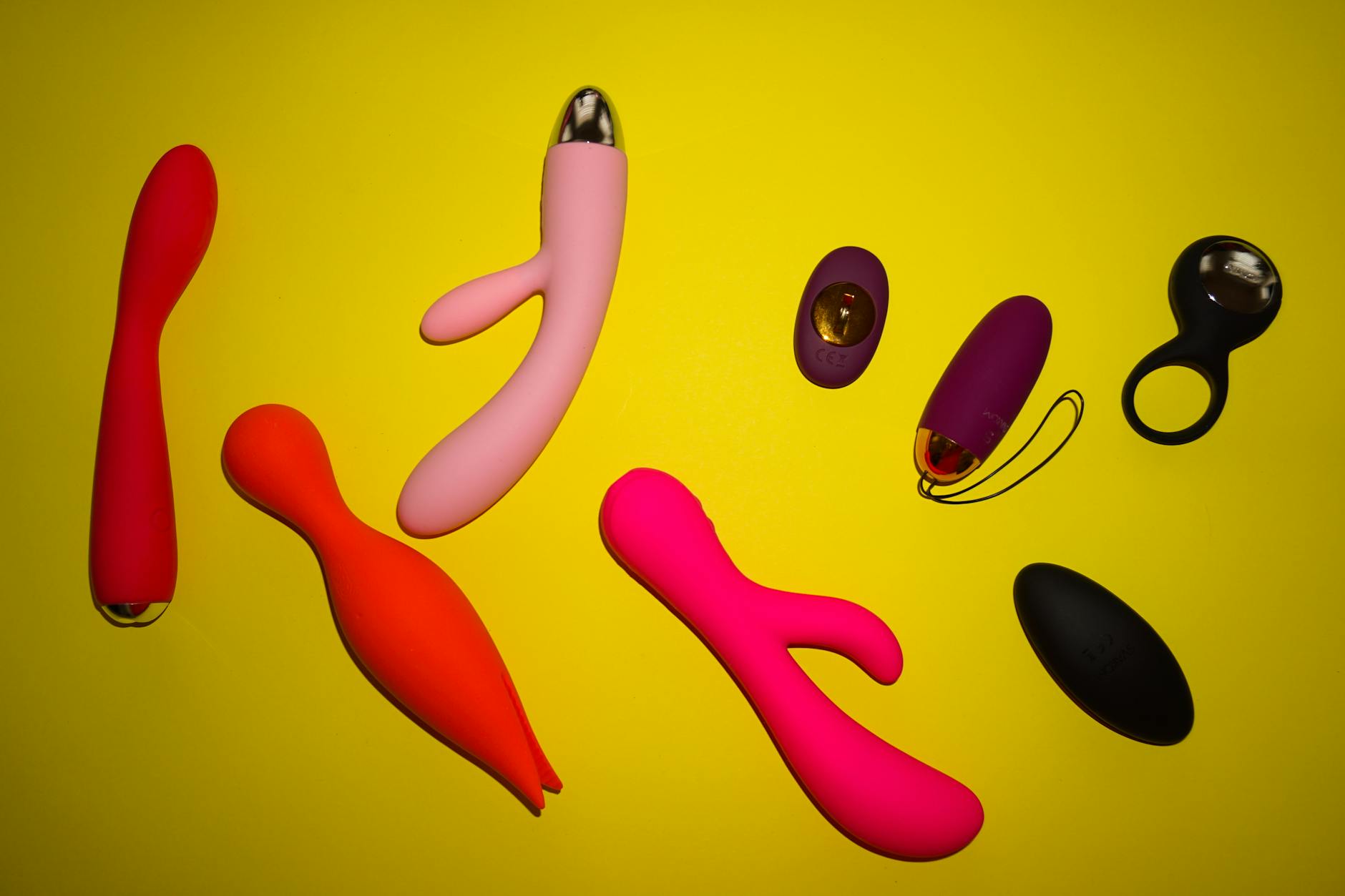
Photo by Madison Inouye on Pexels
What you might notice on the first try
Your arousal might feel different. Clitoral vibrators work faster than manual stimulation, which can actually be disorienting if you're used to a slower build. You might orgasm more quickly, which some people love and others find surprising. The sensation is concentrated, precise, and doesn't require the same constant motion your partner's hand does. This can feel like relief or like you've lost some of the connection. Both reactions are normal.
Your partner might feel relieved. They might realize that using a lemon vibrator during partnered sex means their hand or body is free to touch you elsewhere, or to enjoy their own stimulation. They might feel less performance pressure. They might feel more connected because you're both focused on your pleasure rather than them trying to guess what you need.
Or they might feel slightly left out. If so, that's information, not failure. It means the next time, you adjust. Maybe you use the toy together, with you both holding it. Maybe you use it while they're inside you. Maybe you use it for a shorter period and return to partnered touch. The point is that this isn't one experience. This is the beginning of understanding how toys work in your specific dynamic.
Addressing the emotions that come up
Sometimes after the first time, a partner will say something like "I felt weird watching you enjoy that so much" or "I wasn't sure what I was supposed to be doing." Don't skip over these conversations. They're actually the valuable ones.
"I felt weird" usually means "I'm processing something about my own assumptions about sex or my role in it." You can respond with curiosity: "Tell me more about that. What felt weird?" Often what emerges is relief. Relief that you can feel good without them having to perform a specific way. Relief that sex can be easier for both of you. Relief that pleasure doesn't have to be so effortful.
"I wasn't sure what I was supposed to be doing" is easier to solve. Next time, you can guide them. "I want you to kiss my neck while I use this" or "Hold me while I finish" or "Use this on me while you're inside me." Giving a partner a role actually decreases the awkwardness significantly.
When to use it and when not to
You don't need to use a lemon vibrator every time you have sex. In fact, the couples who integrate toys most successfully are the ones who treat them as optional. Sometimes you use it. Sometimes you don't. Sometimes you use it at the beginning, sometimes at the end. Sometimes one of you uses it solo while the other watches or participates differently.
This flexibility is actually what makes toys work long-term. If you establish an expectation that toys are now required for good sex, you've created a new source of pressure. Instead, let this be: "Sometimes we use this, sometimes we don't. Both are good."
The practical part: lube, positioning, and pacing
Unless you're already a lemon vibrator enthusiast, you and your partner might not know the basics. Water-based lubricant helps tremendously, especially if you're combining clitoral stimulation with penetration. The lemon works best with a little glide.
Positioning matters. If your partner is inside you, they need to be able to see where the toy is. If you're on top, that's often easier. If they're behind you, you'll need to adjust so they can reach or so you can hold the toy. This isn't complicated, but it does require some problem-solving together, which is often playful and brings down any residual tension.
Pacing is about feedback. Use your words. "A little faster" or "Stay right there" or "That's too much" keeps you both in the experience and prevents your partner from wondering if they're doing it right.
Common worries, addressed
"Will they think I want to use this without them?" Maybe eventually, yes. That's normal and healthy. Using a toy solo is different from using it partnered, and both have value. If you haven't discussed solo toy use, that's a separate conversation. Start with partnered and let curiosity develop naturally.
"What if they want to use it on themselves instead of on me?" Then you've just learned something about what excites them. Plenty of people who were hesitant about toys become interested when they realize toys can be for them too. This isn't a problem. This is discovery.
"What if we try it once and they never want to do it again?" That's valid. Your job is to listen to why without trying to convince them otherwise. Sometimes it genuinely doesn't feel good. Sometimes it triggers something. Sometimes it just doesn't fit their sexuality. You can ask, "Is there anything that would make it feel better next time?" If the answer is no, you accept it and move forward.
How this connects to deeper intimacy
Here's what I've seen happen consistently: couples who introduce toys together actually communicate better about sex overall. You've already had the hard conversation. You've already navigated vulnerability and preference and difference. You've already admitted that you want something and asked for what you need. Those are relationship skills that matter in and out of the bedroom.
Introducing a lemon vibrator to a partner unfamiliar with toys isn't really about the toy. It's about building a relationship where desire is voiced, experimentation is safe, and pleasure belongs to both people. That foundation changes everything.
People also ask
How do I know if my partner is uncomfortable with vibrators?
Discomfort usually shows up as avoidance (changing the subject), minimization ("It's fine, whatever you want"), or distance (physical or emotional withdrawal after). Ask directly: "I noticed you seemed quiet when I brought this up. What's going on?" This gives them permission to be honest. Sometimes discomfort is about the toy itself. Sometimes it's about feeling like something is missing between you. Both are solvable if you know what you're actually dealing with.
Can we use a lemon vibrator if my partner doesn't want me to orgasm from it?
That's a boundary to honor and understand. Ask why. Is it about feeling replaced? Is it about concern that you'll stop wanting partnered sex? Is it about their own sexual beliefs? Once you understand the root, you can address it. You might agree to use the toy only for foreplay, or only sometimes. You're not giving up pleasure. You're building a compromise that works for both of you.
What if I'm the partner hesitant about toys?
Your hesitation matters. You're not broken or prudish for wanting to move slowly or needing reassurance. Ask your partner what draws them to this. Listen without defending. Tell them what makes you nervous. "I worry you'll prefer it to me" or "I don't understand how this works" or "I feel out of control when things are new." These are real concerns that deserve real conversation before anything happens.
How long should I wait before introducing a clitoral vibrator to a new relationship?
There's no timeline. Some couples talk about toys on the third date. Some wait years. What matters is that you both feel safe and that the conversation happens when you're both genuinely open, not just going along with it. In new relationships, the pressure to seem "cool with anything" can prevent honest feedback. Move slowly enough that both people can actually tell you what they want.
Is using a lemon vibrator during sex the same as using toys for solo pleasure?
Not quite. Solo toy use is about self-knowledge and self-pleasure. Partnered toy use is about shared experience and often requires more communication around comfort, positioning, and pacing. Both are valuable. One doesn't replace the other. Some people feel much more comfortable exploring toys solo first, which is completely fine. You can always bring that knowledge into partnered sex later.
What if my partner wants to use the toy on themselves instead of on me?
That's their choice to make. Some people are curious about their own pleasure first. Some people feel less pressure when they're in control of the toy themselves. If this shifts the dynamic in a way that doesn't work for you, you can talk about it. "I'd love to try it on you together" or "I'm excited to see what feels good for you." You're building shared experience over time, not just in one night.