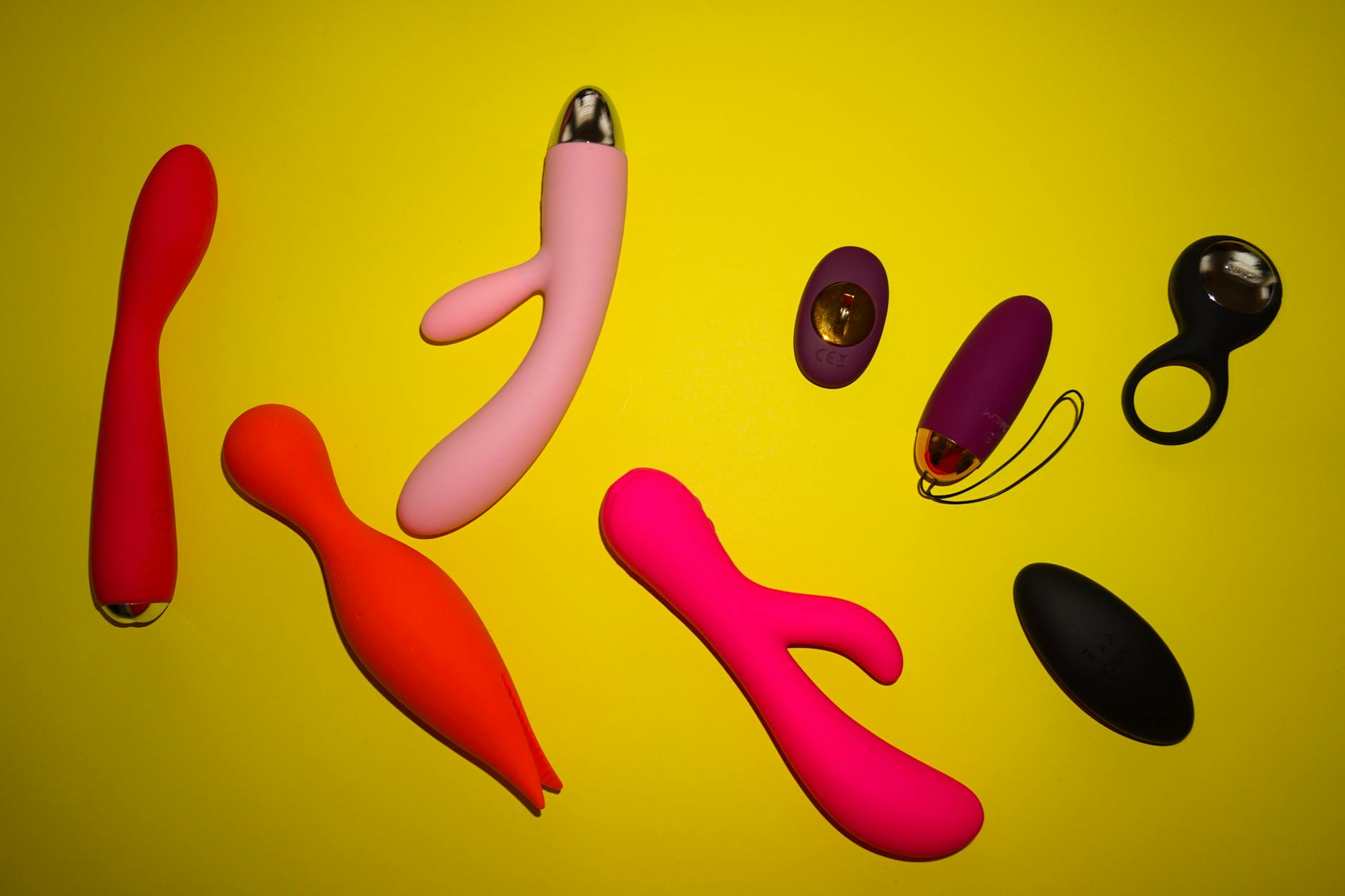
Let's name what's actually happening
You sit down alone, fully intending to feel good. Your hand reaches for a lemon clitoral vibrator. And then your brain starts narrating: "Am I doing this right? How long is this supposed to take? Why am I not getting there faster? What if someone comes home? Is this actually working?" Within seconds, arousal tanks. Your nervous system has switched from parasympathetic (rest and digest, aka pleasure mode) to sympathetic (fight or flight). You're not broken. This is your threat-detection system working exactly as designed, except it's detecting a threat that doesn't exist.
Solo play anxiety is wildly common, and almost nobody talks about it.
Most conversations about pleasure assume the friction is external: finding time, managing a partner's schedule, dealing with physical pain. But performance anxiety during masturbation is internal, which makes it feel more shameful and harder to troubleshoot. Here's what I know from fifteen years of coaching: the people who struggle most with solo anxiety are often high-achievers, people-pleasers, or anyone whose nervous system learned early to scan for what's wrong instead of sinking into what feels good.
Why anxiety hijacks pleasure (the neurology part)
Your clitoris has roughly 8,000 nerve endings. All of them are connected to your brain via sensory pathways. But here's the thing: those pathways share bandwidth with your threat-detection system. When cortisol spikes (the stress hormone), it quite literally crowds out the neural space needed for sexual pleasure. You can't focus both on "is this taking too long" and "oh that feels incredible" in the same moment. Your brain picks threat assessment, every time.
Solo play anxiety often has a specific flavor. It's not "someone will judge me" (that's partnered anxiety). It's internal performance pressure: you're simultaneously the performer and the audience, which creates a feedback loop. You're watching yourself experience pleasure, evaluating whether it's happening fast enough or intensely enough, which stops pleasure from happening at all.
Clitoral vibrators like Lemon's air-suction design interrupt this loop in a very specific way. Because the sensation is novel and localized, it pulls your attention out of your head and drops it directly into your body. You can't think about whether you're doing it right when your clitoris is experiencing something it's never felt before.
The three types of solo anxiety (and how to recognize yours)
Type 1: The timer. You're watching the clock, worried about how long it's taking. This often comes from internalizing the myth that real orgasms happen within a set timeframe. Solution: Set a timer at the start for 30 minutes and literally ignore it. When you know you have a container of time, your brain relaxes.
Type 2: The evaluator. You're narrating your own experience: "This feels okay but not amazing." "I'm almost there, keep going." "Why isn't this working?" You're in your head instead of in your body. Solution: Make a rule that you're not allowed to use the word "almost" or "yet." If you notice you're narrating, say one word aloud that describes what you actually feel right now. Not judgment, not prediction. Just sensation.
Type 3: The intruder. You're fine until a random thought crashes in: "What if someone walks in? What if my neighbors hear?" Your nervous system treats that thought as a genuine threat. Solution: Name the thought, don't fight it. Say it aloud: "That's my intrusive thought. It's not real. I'm safe right now." Then come back to sensation.
How to create the conditions for anxious-free pleasure
Four practical things I recommend to almost every client working through solo anxiety.
First: Set up your space like you mean it. Not candles and rose petals (unless that's genuinely you, but most anxious people overthink aesthetics and miss sensation). I mean: lock the door, put your phone in another room, tell your partner you need 45 minutes of uninterrupted time. When your nervous system knows you're actually safe and uninterrupted, it switches off the threat alarm.
Second: Start with five minutes of nothing. Don't jump straight to touching yourself. Lie down, close your eyes, and just notice your breath for five minutes. This sounds annoyingly woo-woo but it's literally rewiring your nervous system. You're teaching your body that stillness is safe.
Third: Use a lemon clitoral vibrator at a lower setting first. Most people grab for intensity immediately, which can actually spike anxiety. Start at setting 1 or 2 just to familiarize your clitoris with the sensation. You're not trying to come yet. You're just exploring. This reframes the entire experience from "performance" to "discovery."
Fourth: Give yourself an out. You're allowed to stop whenever. You don't have to finish. The goal is not an orgasm. The goal is feeling something good in your body without judgment. When you remove the finish line, your body actually relaxes enough to reach it.
The role of clitoral vibrators in breaking the anxiety cycle
Here's why Lemon Vibrators specifically help with anxiety: The air-suction technology creates a sensation that's unusual enough to demand your full attention. You can't think about whether you're doing it right when your nervous system is trying to process "what is this and why does it feel so good?"
There's also a confidence piece. When you use a toy designed specifically for clitoral pleasure, it shifts the narrative from "am I doing this right?" to "this device is doing the work, I just have to receive." That's the permission your anxious brain actually needs. You're not responsible for the sensation anymore. You're just the person experiencing it.
For people with Type 1 anxiety (the timer people), vibrators reduce the time factor significantly. Most users find they can reach orgasm in half the time, which removes one major cortisol spike.
When anxiety is actually something deeper
Sometimes solo play anxiety points to something worth exploring with more support. If you notice that anxiety during masturbation mirrors anxiety you feel during partnered sex, or if it's connected to trauma, shame about your body, or religious messaging about sexuality, you might benefit from working with a therapist who specializes in sexual health alongside these practical strategies.
Anxiety during solo play can also be a sign that you need to rebuild your relationship with your own pleasure. If you've spent years prioritizing someone else's experience, touching yourself without that framework can feel disorienting. That's not broken. It just means you're learning something new.
The shift that changes everything
What I notice with my clients who move through solo anxiety is that it usually comes down to one permission: you're allowed to feel good without earning it. You don't have to be productive, fast, or impressive. You don't have to prove anything. You just get to experience sensation in your own body, at your own pace, with zero audience.
That's actually radical. Most of us have spent our whole lives performing. Learning to receive pleasure alone, without judgment or timeline, rewires how you relate to pleasure everywhere. And Lemon's clitoral vibrators are honestly one of the most straightforward ways to teach your nervous system that your body is worth this time and attention.
FAQ: Anxiety and solo pleasure
Is it normal to feel anxious when touching yourself?
Completely normal. Anxiety during masturbation is incredibly common, especially for people who were taught that solo pleasure is wrong, shameful, or selfish. Your nervous system might still be running that old code even if your conscious mind has moved past it. That doesn't mean something's wrong with you. It means you're unlearning a pattern.
Can a clitoral vibrator actually help with anxiety, or is it just a distraction?
Both. The novelty of sensation genuinely redirects your attention from anxiety thoughts to present-moment sensation. But it's also breaking the pattern you've built: vibrators give you permission to receive pleasure without doing it "correctly." That permission is what actually loosens anxiety's grip. Most people notice a difference within 3-4 sessions.
What if I'm anxious even with a vibrator?
Start slower. Lower settings, shorter sessions, zero expectation of orgasm. Some people also find that using a vibrator while doing something grounding (watching something funny, listening to a specific song) helps their nervous system stay regulated while they're learning to feel. The goal is not to white-knuckle your way to pleasure. It's to gently teach your body it's safe.
How long should solo play actually take?
There's no "should." Some people come in four minutes. Some take 45. Neither one is more valid. If you're in your head about timing, set a timer for whatever feels generous (20-30 minutes) and let that be the container. What matters is that you're giving yourself enough time that your nervous system can actually relax.
Is it okay to use a lemon vibrator every time I masturbate?
Absolutely. Some people use a clitoral vibrator every single session. Some people alternate between toy and hand. Some people use it once a month. There's no normal. The only guideline is: does this feel good and sustainable for your body? If yes, you're good.
What if I still can't orgasm even with a vibrator and less anxiety?
Then pleasure is the goal, not the finish line. Plenty of people who can't orgasm still experience intense, nourishing sensation and satisfaction from solo time. Your nervous system learns over time that it's safe to open up. Some of my clients found that their first real orgasm came six months after they stopped trying for one. The outcome shifted once the pressure dissolved.
The bottom line
Anxiety during solo play is your nervous system protecting you from a threat that doesn't exist. The fix isn't forcing yourself to relax. It's creating the conditions where relaxation becomes possible: time, privacy, permission, and a tool (like a Lemon clitoral vibrator) that redirects your attention from performance to sensation. When you give yourself that, pleasure usually follows.
If you're ready to explore what reclaiming solo pleasure actually feels like, reach out to the team at Lemon Vibrator. They can help you find exactly what you need. And remember: you deserve this time, and your body deserves this attention. No performance required.